Now that the holidays have been enjoyed (or not), we can return to the Desert Botanical Garden to revisit the Butterfly Pavilion. From their website, "Since 2002, the Butterfly Pavilion has centered the special relationship between insects and plants of the Sonoran Desert. The Garden’s Pollinator Conservation Research Program dives deeper into this relationship by working on several projects such as plant propagation, milkweed ecology, and determining how climate change will affect the population of the monarch butterfly, which is now listed as endangered.
In 2017, the Garden reopened this 3,200-square-foot open-air structure, featuring lush garden plantings, a water feature, thousands of live butterflies, engaging programming, and state-of-the-art nursery space.
Desert Botanical Garden is committed to continuing the conversation on issues that threaten butterflies and other pollinators’ survival by determining ways the public can take action to assist in protecting these populations in their own backyards."
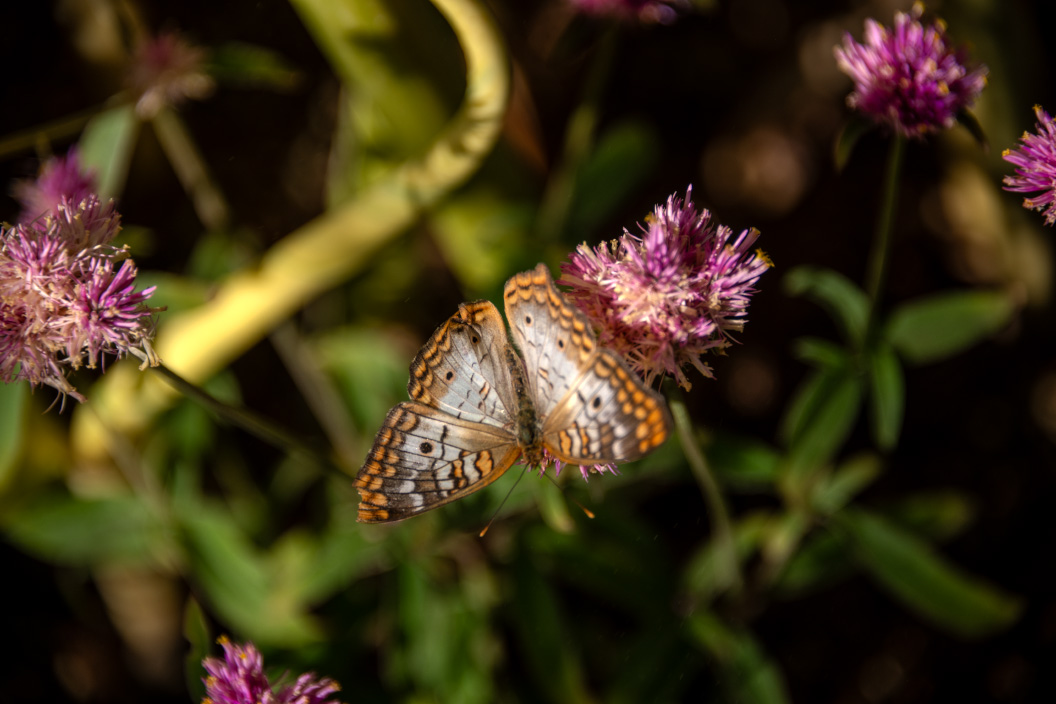
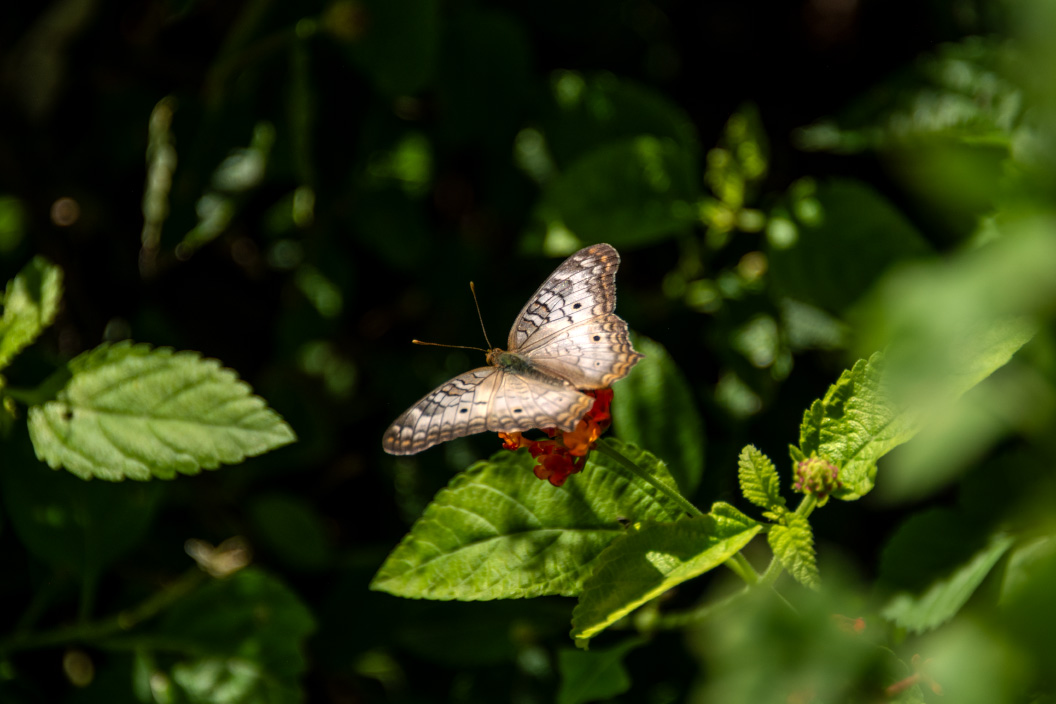
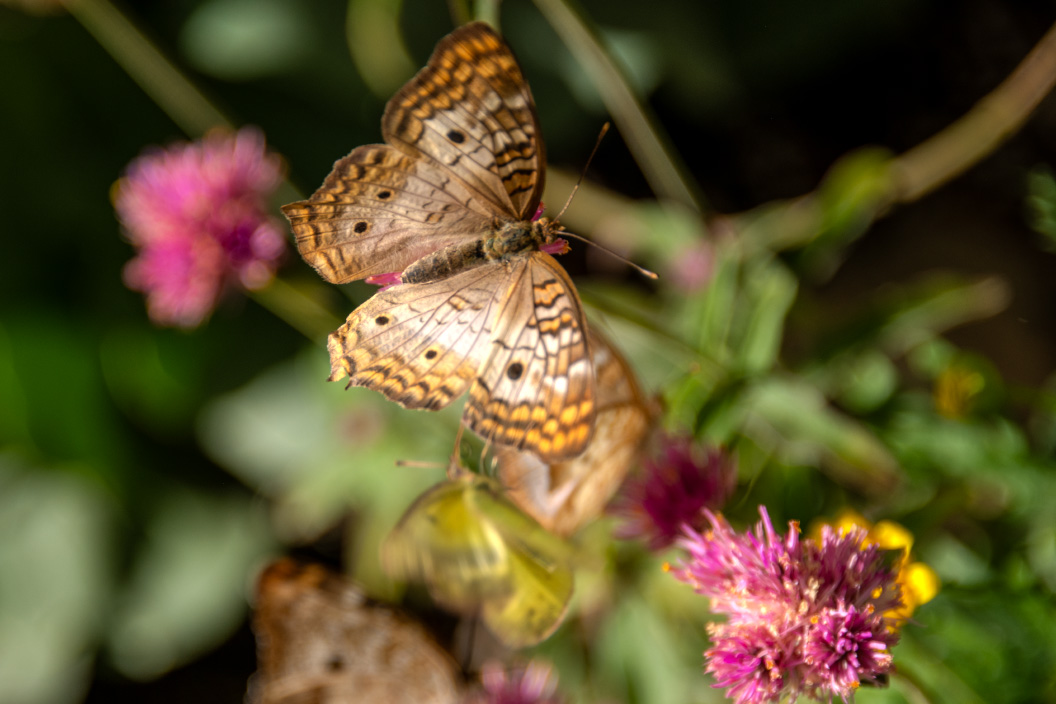
This photo is of a White Peacock butterfly, which is found in the southeastern United States, Central America, and throughout much of South America.
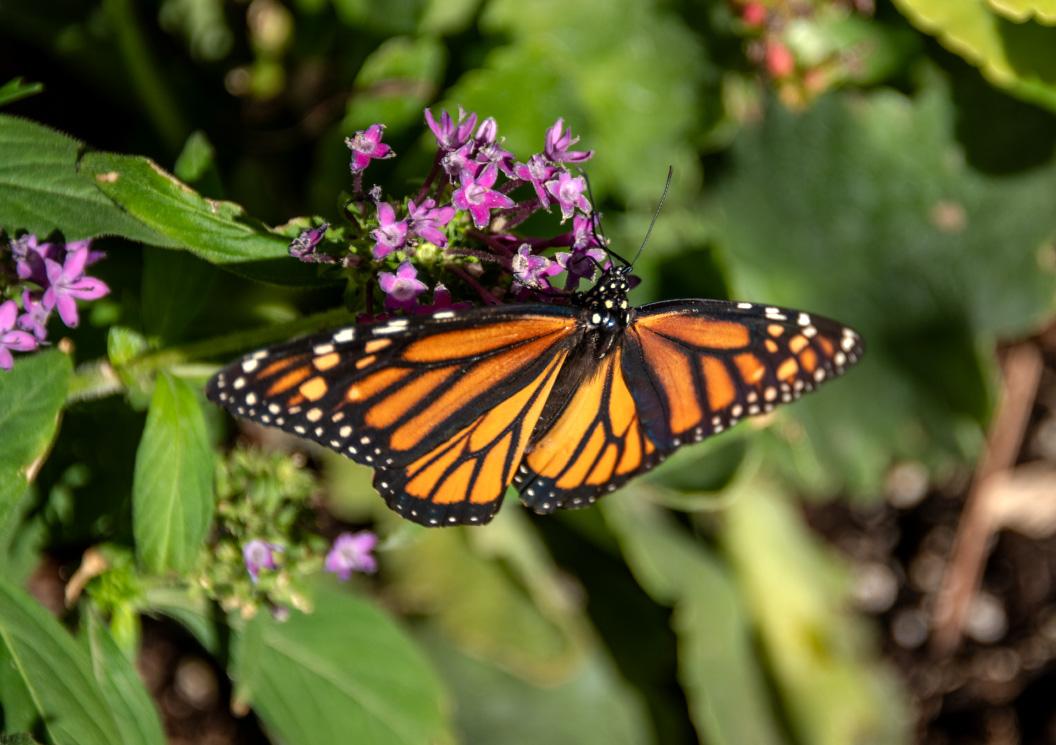
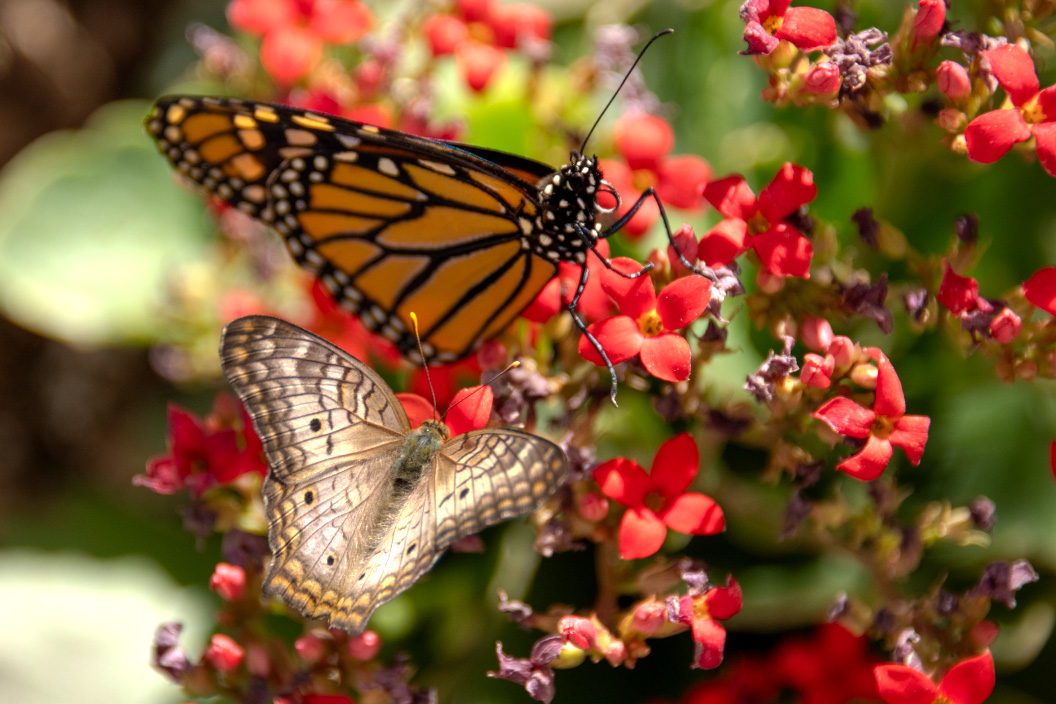
This is a Monarch butterfly, which is well-known to most Americans because of its migration from the northern and central United States and southern Canada to Florida and Mexico — then back again in the spring. As you may recall, the journey is so challenging that many do not survive the full trip, but new generations are born and complete the journey.
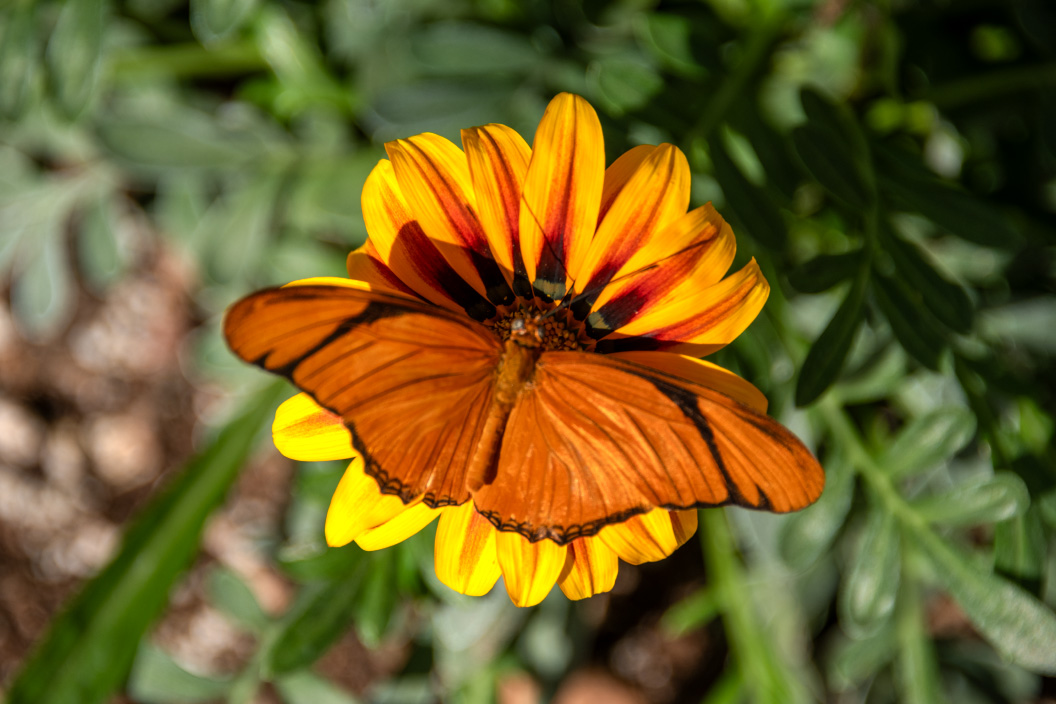
Here we see a Julia butterfly, native to Brazil, southern Texas, and Florida. In the summer, it can be found as far north as eastern Nebraska. Wikipedia says, "that they feed on the nectar of flowers, such as lantana and shepherd's-needle, and the tears of caiman, the eye of which the butterfly irritates to produce tears."
Curiously, when I first loaded the photo into Photoshop, it gave me the impression that the flower was about to eat the butterfly. But no, it was safe.
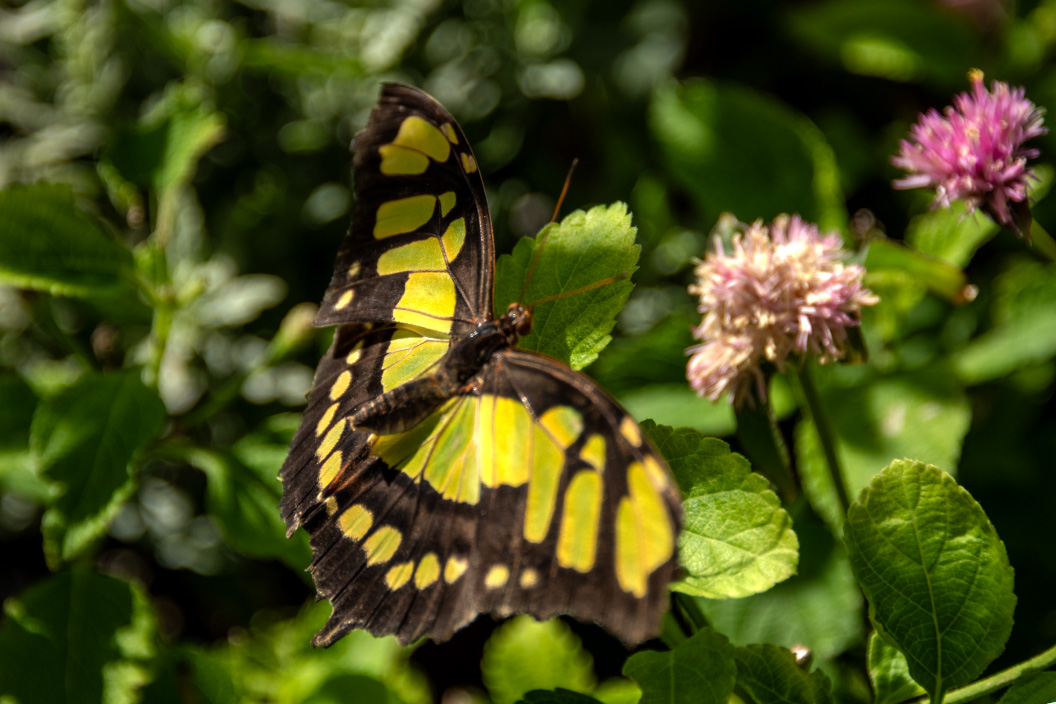
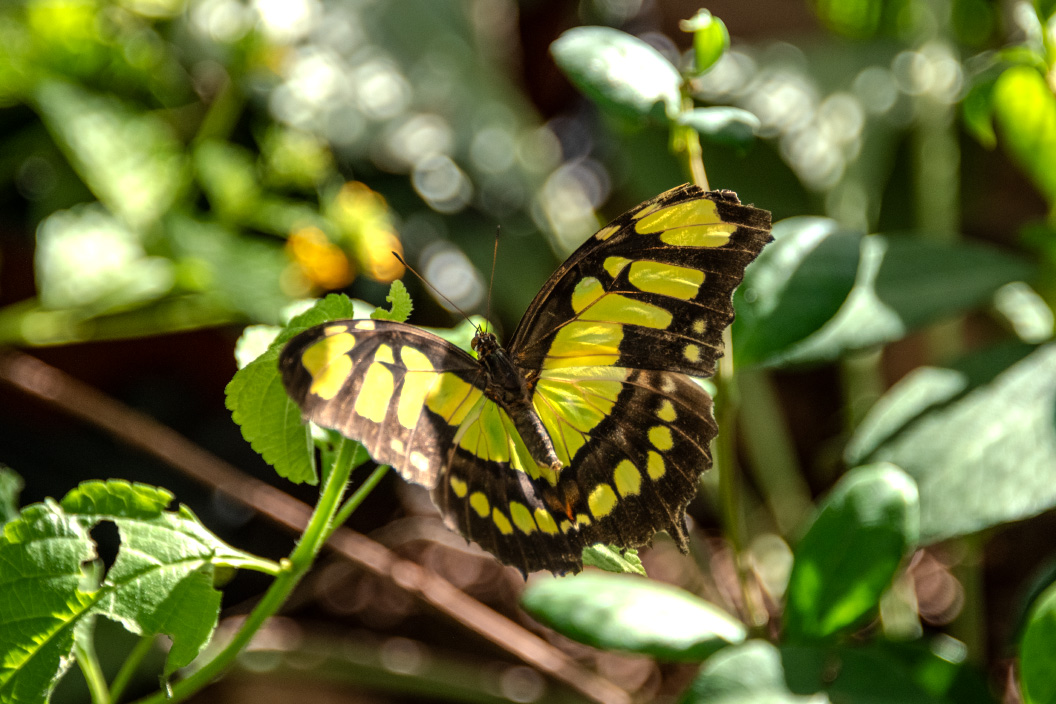
Here we see a malachite butterfly. Wikipedia says, "The malachite has large wings that are black and brilliant green or yellow-green on the upperside and light brown and olive green on the underside. It is named for the mineral malachite, which is similar in color to the bright green on the butterfly's wings."
Here is another photo of a White Peacock butterfly. According to Wikipedia, "The males of the species display a unique territorial behavior, in which they stake out a territory typically 15 meters in diameter that contains larval host plants. They perch in this area and aggressively protect it from other insects and other male white peacocks."
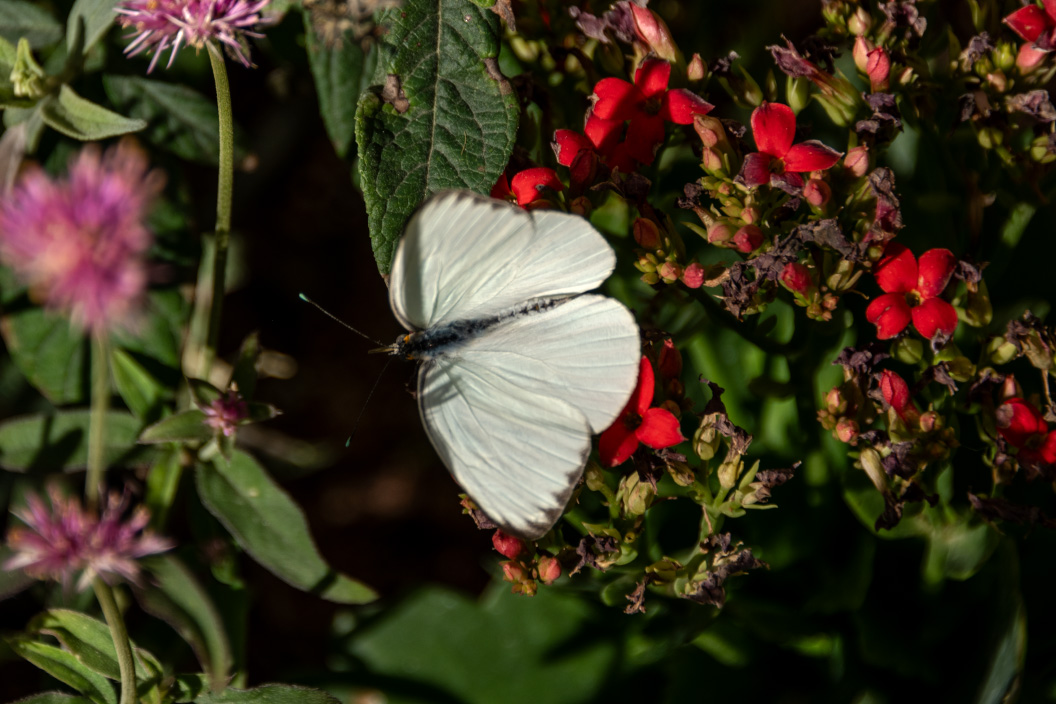
More on the Great Southern White Butterfly — It is a migrating species that moves in one direction within its life span and does not return. It breeds in Florida but sometimes migrates along the coast up to 160 km to breed in more suitable areas.
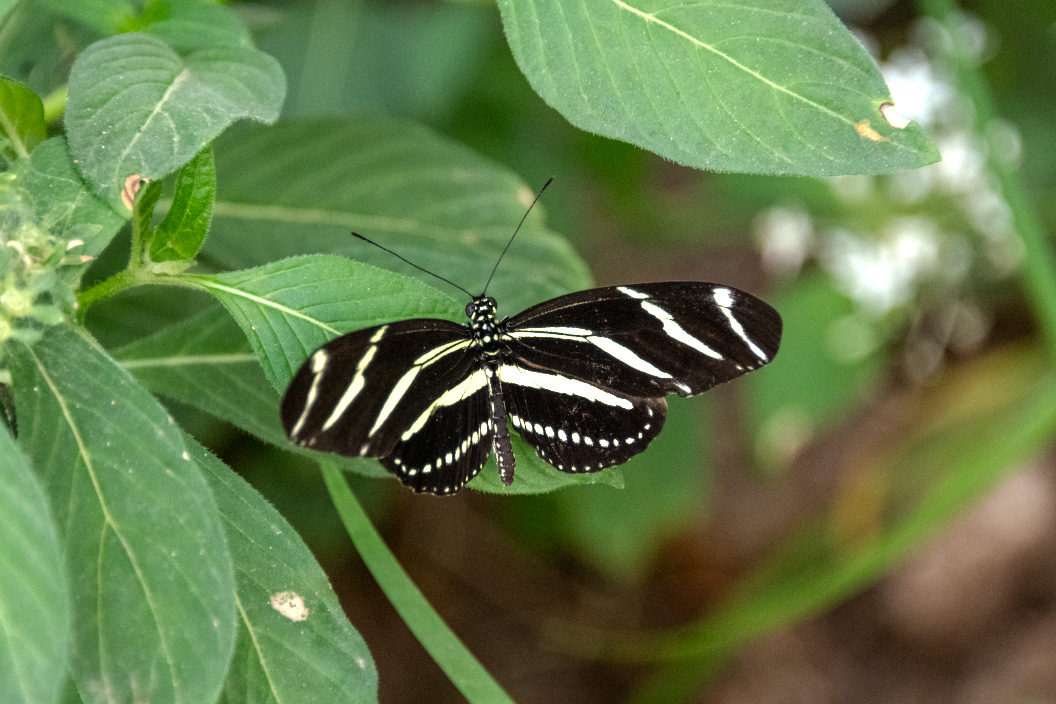
The Zebra Longwing features bold black and white stripes, which is said to be "aposematic" — warning off predators. It is the state butterfly of Florida. The species is distributed across South and Central America and as far north as southern Texas and peninsular Florida; there are migrations north into other American states in the warmer months.
Here is another photo of a White Peacock butterfly perched on colorful flowers. This photo is one of my favorites.
However, add in a Monarch butterfly and a White Peacock butterfly with a host of colorful red flowers, and, for me, this photo takes the prize.
Here we see another Malachite butterfly, which is found throughout Central and northern South America, where it is one of the most common butterfly species. Its distribution extends as far north as southern Texas and the tip of Florida.
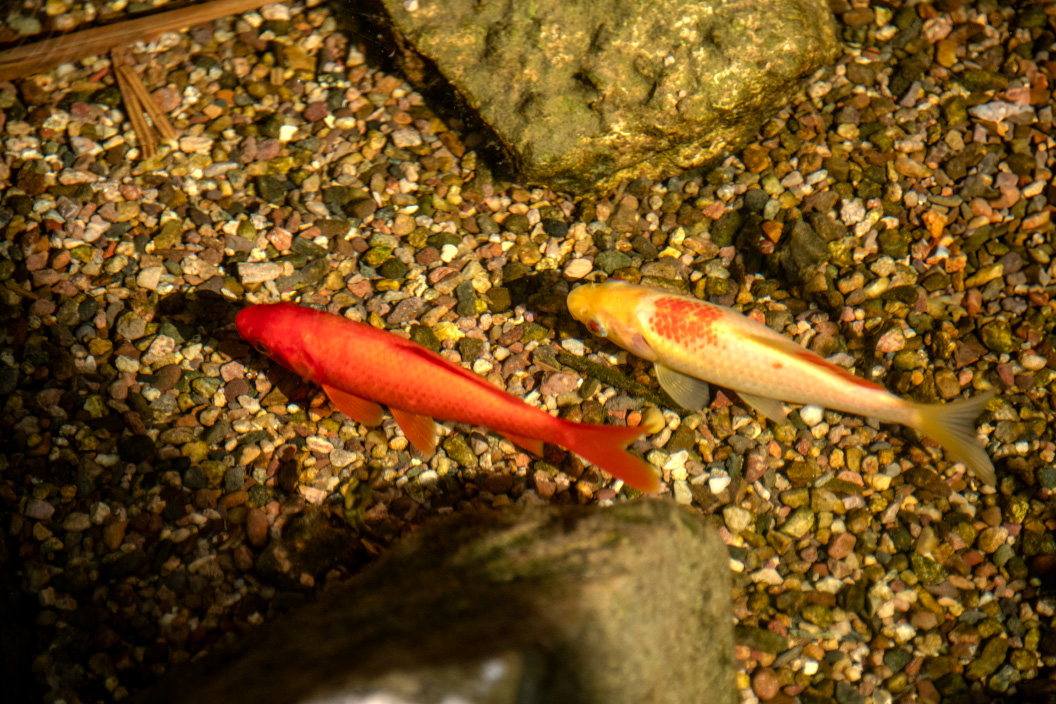
Obviously, these are NOT butterflies but Japanese Koi, which are often used in gardens for additional color. There are many varieties of ornamental koi, originating from breeding that began in Niigata, Japan, in the early 19th century.