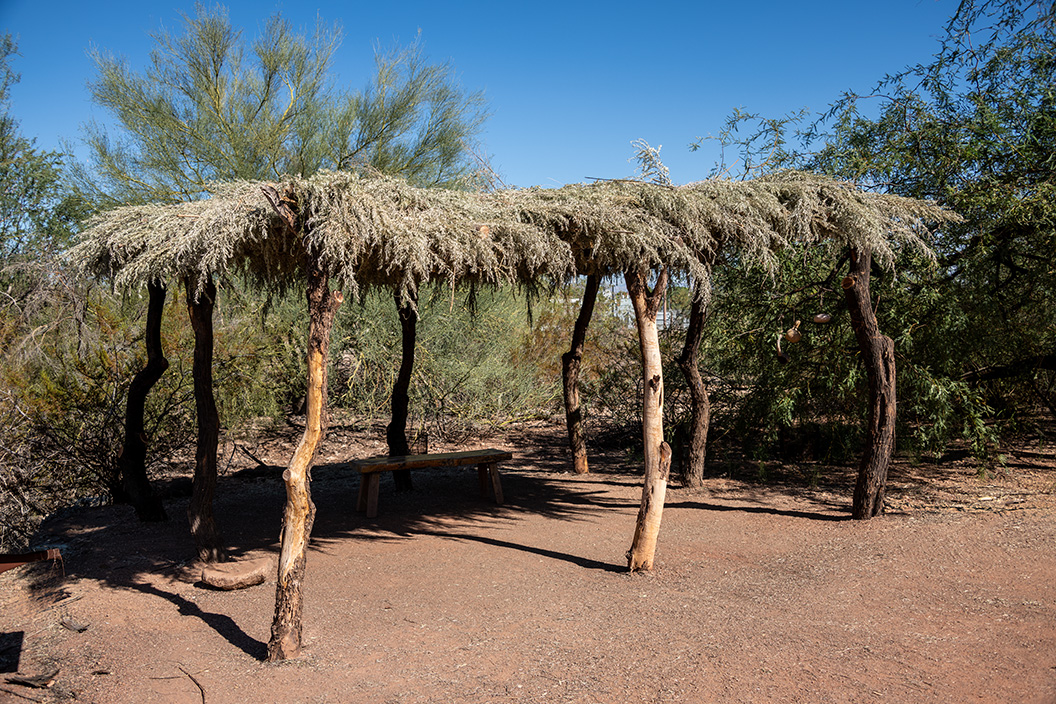
We are still in the area showcasing the lifestyle of the Native Americans who lived in the desert, especially those in the Sonoran Desert — southwestern US and central Mexico. This is a grass hut to provide shade in the hot sun and warmth in the cool nights (yes, it does get cool at night in desert areas).

Nearby was a shaded pavilion where residents could sit in the shade and talk or do domestic tasks. It is also a welcome rest spot for current residents of the desert.
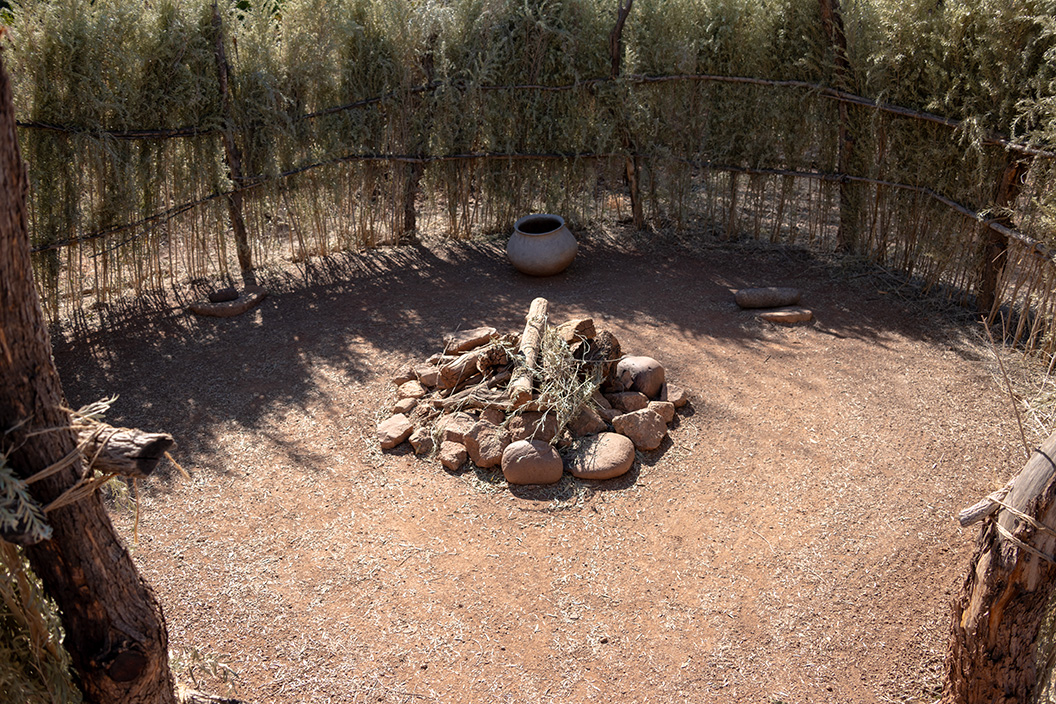
This is a cooking area where a fire would be built in the center with a protective barrier at the perimeter. The barrier was essential to prevent meat-eating animals from sneaking in for a quick snack while the cooks were not looking.
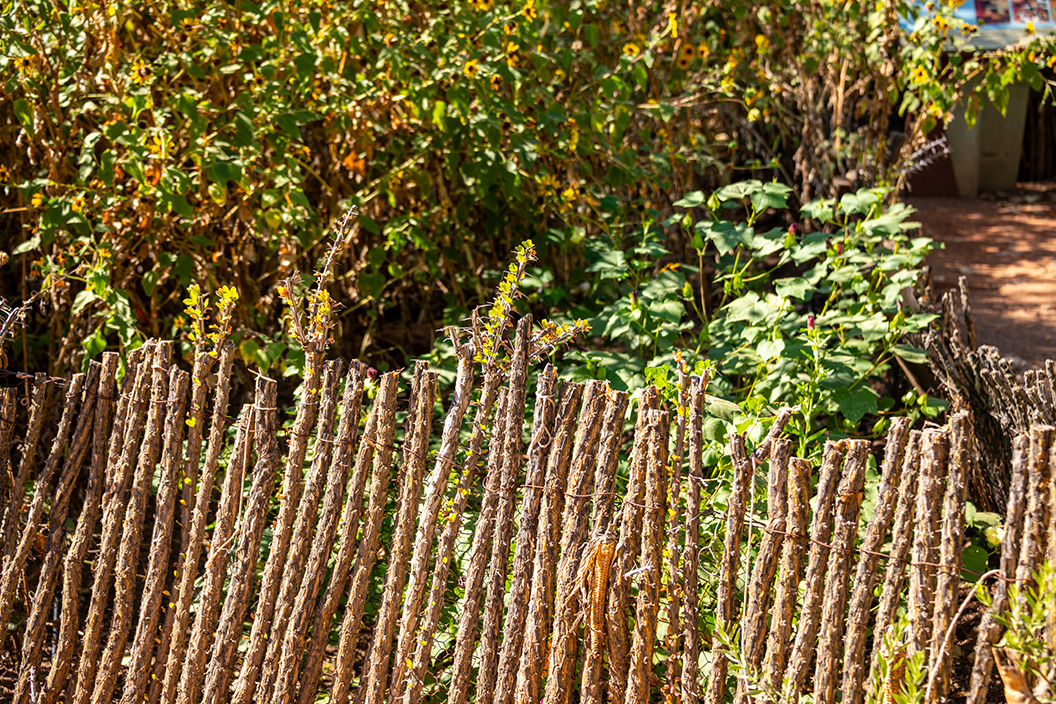
This barrier is protecting plants being grown for consumption or other uses. Look closely at the "sticks" used for the barrier. They have nasty thorns on them — which I recognize as ocotillo. These thorny sticks were quite effective in keeping out the varmints from any planted area. Note that we sell ocotillo at Lowe’s, so you could do the same thing in your garden. Ocotillo is also quite beautiful in the wetter months (or with irrigation) — tiny green leaves and beautiful bright crimson flowers.
From Wikipedia: "Mesquites grow as a small shrub in shallow soil or as tall as 50 feet (15 m) in deep soil with adequate moisture, and form a rounded canopy nearly as wide. They may have one or multiple trunks with a multitude of branches. They have bipinnate leaflets of a light green to blue hue that cast a light to deep shade, depending on the species. Spikes of flowers form in spring and summer that form a flat pod of beans 2 to 6 inches (5 to 15 cm) long. Many varieties form thorns. When cut to the ground, the tree can often recover."
Mesquite trees were imported to Hawaiʻi to provide a windbreak to protect crops and animals. The tree grows quickly and can live for over a millennium. It makes a good shade tree, if one does not mind the nasty thorns of the fallen branches. I recall hiking on Molokaʻi and getting a thorn stuck in the sole of my shoe — and I had no tool to remove it until I returned to my vacation rental — I always travel with a Leatherman and I could use its pliers to remove the thorn.
The hard wood of the mesquite is a source of long-burning firewood and charcoal. Kiawe pods can be used as livestock fodder, ground into flour, turned into molasses, or used to make beer. The light yellow flowers attract bees, which produce a much-sought-after white honey.

Grasses served many purposes for the indigenous people. Grass was bundled, dried, and made into brooms or hairbrushes. It was also laid onto hot stones to prevent steam from escaping while cooking. Vanilla grass is known for its sweet, aromatic scent, which is enhanced when it is rained on or burned. The sweet odor is from coumarin oil, which is similar to vanilla. Smoke from this plant was also used to purify dancers. Also, it was mixed with tobacco and used in ceremonies. It was braided into women’s hair. The braid signified Mother Earth. Each of the three strands making up the braid had a specific meaning: mind, body, and spirit. Some tribes soaked the leaves in water and used the solution as a hair rinse. Vanilla grass was used in making baskets, mats, rugs, bedding, and cradleboards. It was also used for medicinal purposes. There were many other uses, but I will leave that for you to explore.

Here we see a Western Apache household. Traditionally, these people were a semi-nomadic group with a wide range of territory that included the Sonoran Desert. They built wickiups like this one for homes and shelters using arched willow saplings held together by split yucca leaves and thatched with cottonwood and willow branches.

This is an agave roasting pit. For centuries, agave has been roasted for food in pits like this by people in the Sonoran Desert. Before roasting, the leaves are removed to expose the heart. Agave hearts are then sandwiched between layers of vegetation on top of hot coals and baked for up to four days.
Almost all of the agave plant can be cooked and eaten, including the leaves, flowers, stalks, blossoms, and seeds.

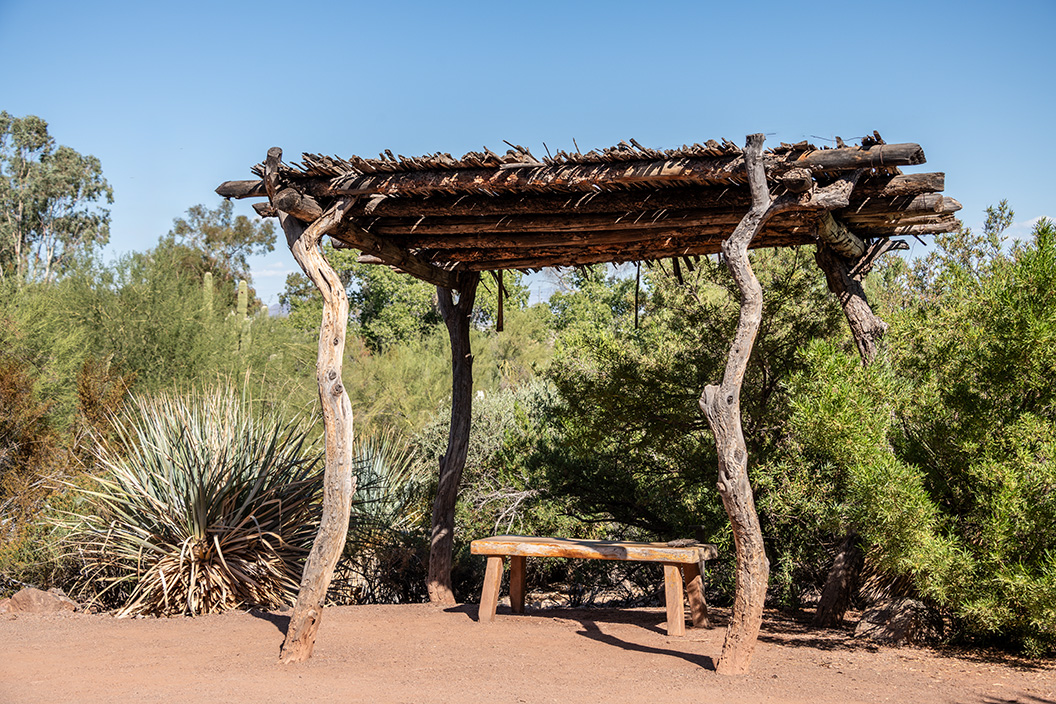
Another shady resting spot for the weary.
This is the entrance to a small garden. Note the ocotillo fencing around the outside — as I described before, to keep out the pesky animals that want to eat up the people’s veggies.

This is a close-up of the corn planted here. Note that this is more like the field corn used today to feed livestock — not the sweet corn that we enjoy each summer. Corn, also known as maize, was an important crop to the Native American Indians. Eaten at almost every meal, this was one of the Indians' main foods. Corn was found to be easily stored and preserved during the cold winter months. Often, the corn was dried to use later. Dried corn was made into hominy by soaking corn in water until the kernels split open. These would be drained and fried over a fire.
American Indians would also grind corn into cornmeal. They would use mortars and pestles made from either rock or wood. Corn was placed into the hollowed-out mortar and then by pounding the corn with the pestle, this would grind it up into a powdery form. Cornmeal could then be used for cornbread, corn syrup, or corn pudding. Often cornmeal was mixed with beans to make succotash or to thicken other foods.

I was not quite sure what this was. My guess was some type of bird nest. Your guess may be better than mine. It is still an interesting sight.
