1941 Packard 110 Special Coupe
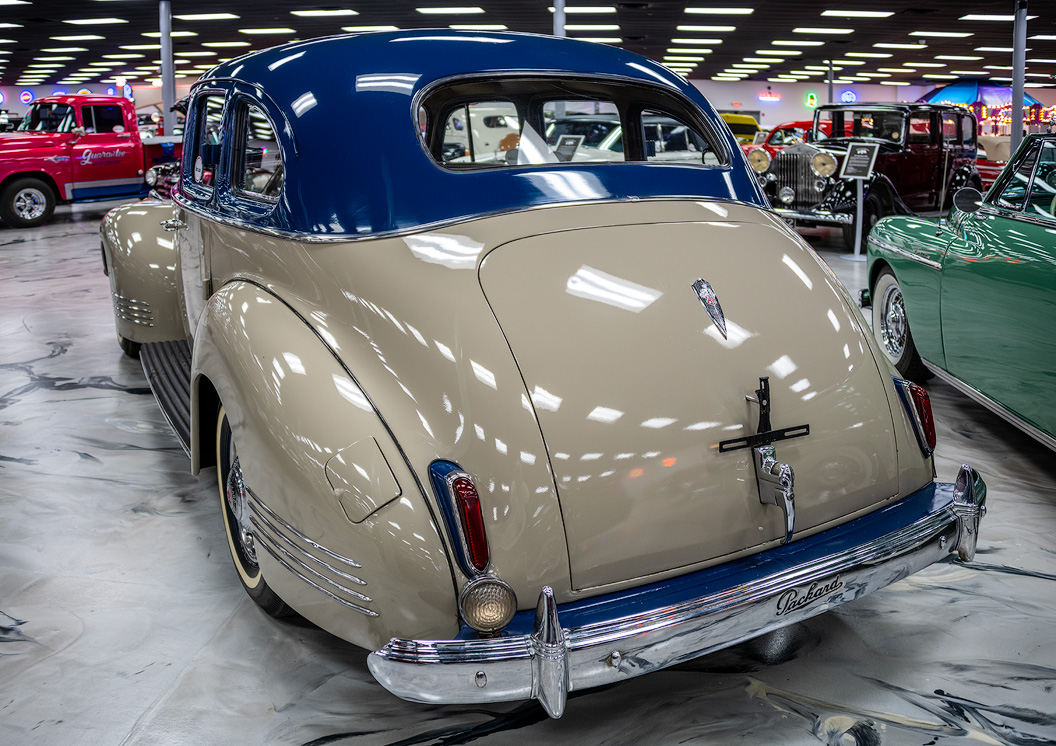
The Packard Eighteenth Series 110 was a range of six-cylinder automobiles produced by the Packard Motor Car Company of Detroit, Michigan during the 1940 and 1941 model years. The 110 designation was renamed from the previous Packard Fifteenth Series 6. The 110 shared the wheelbase of the 120 but was given the 110 designation to indicate it was the entry-level product.

Critics of the Packard 6 and 110 have long maintained they hurt Packard's reputation of being America's premier luxury car maker. Still, the reintroduction of the Model 6 could not have come at a better time for the automaker, just before the nation's 1938 economic depression. By offering the less expensive model, the company was able to attract buyers who would otherwise be unable to purchase more expensive cars. Prices ranged from $867 for the Business Coupe to $1,200 for the Station Wagon.
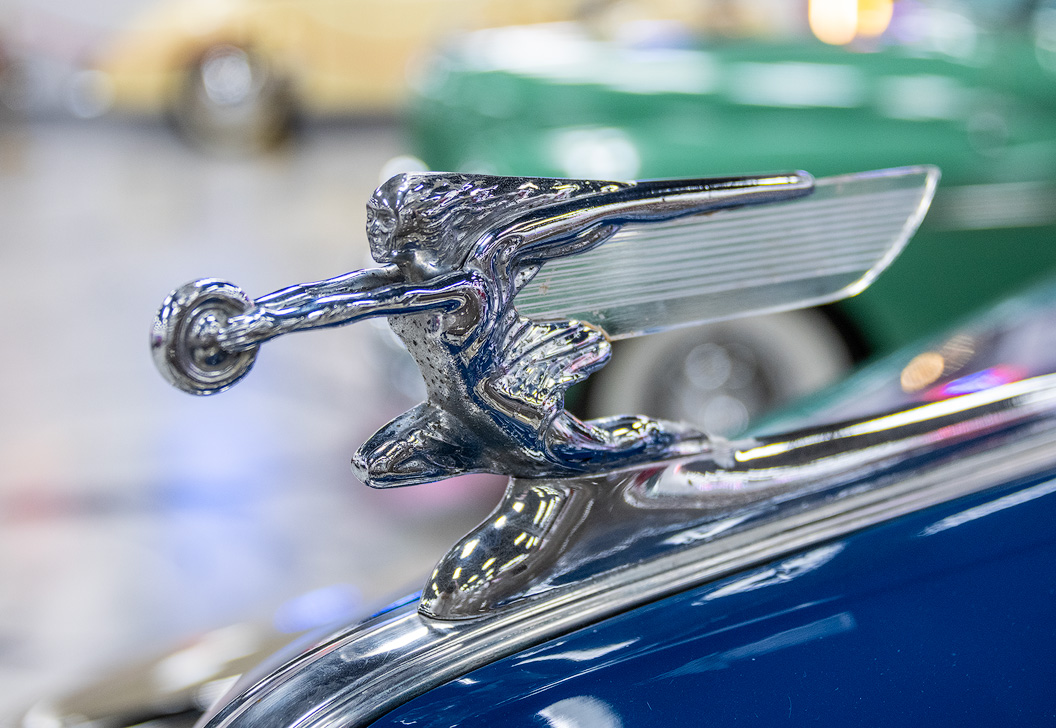
Built on a shorter wheelbase than prior models, the 110 was introduced in August 1939. The 110 was available in a broad range of body styles, including both two- and four-door sedans, station wagon, and convertible. The shortened hood louvers doubled as hood releases, and the running boards were now optional equipment, as were two-tone paint schemes, air conditioning, radio, and heater.
The 110 remained the most popular (and affordable) model in the Packard lineup, with 34,700 sold in 1941.
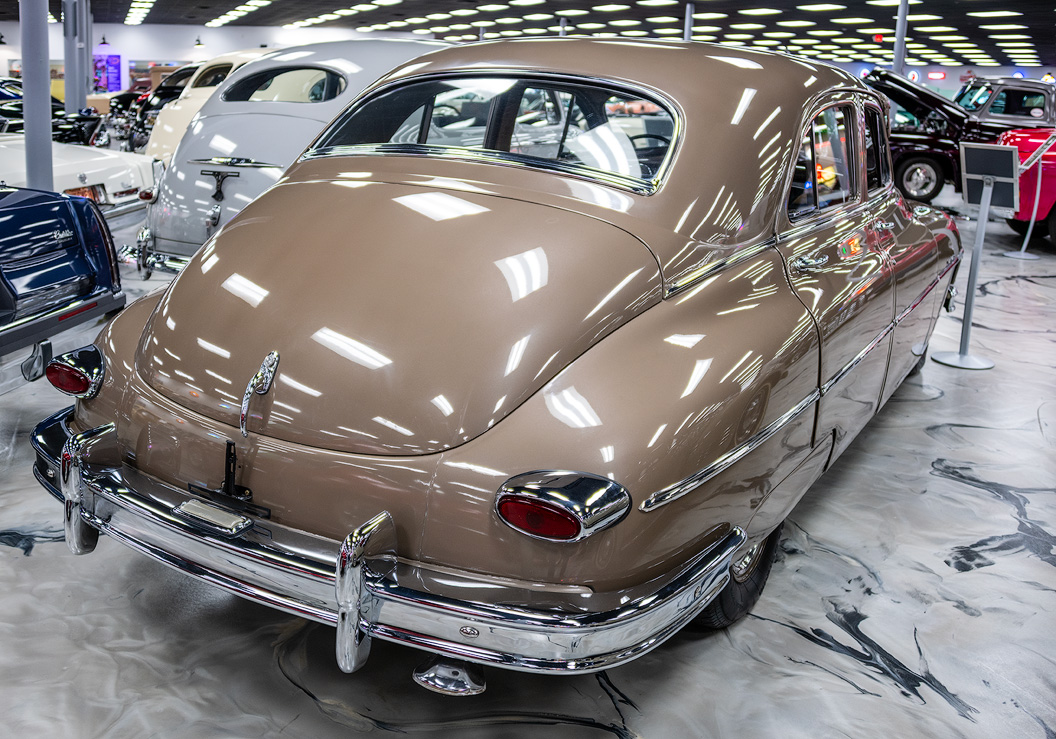
1950 Packard Custom 8 Sedan
Packard was one of the "Three P's" of American luxury cars, along with Peerless and Pierce-Arrow. Packard was the only one of the three to survive the Great Depression of the 1930s. By the 1950s, the coach-building tradition and made-to-order vehicles of the 1920s and 1930s were replaced by practical factory-built cars. Packard had exited World War II in a strong financial position, that had helped it endure the early 1930s, but it still trailed the Big 3 automakers in styling and design.
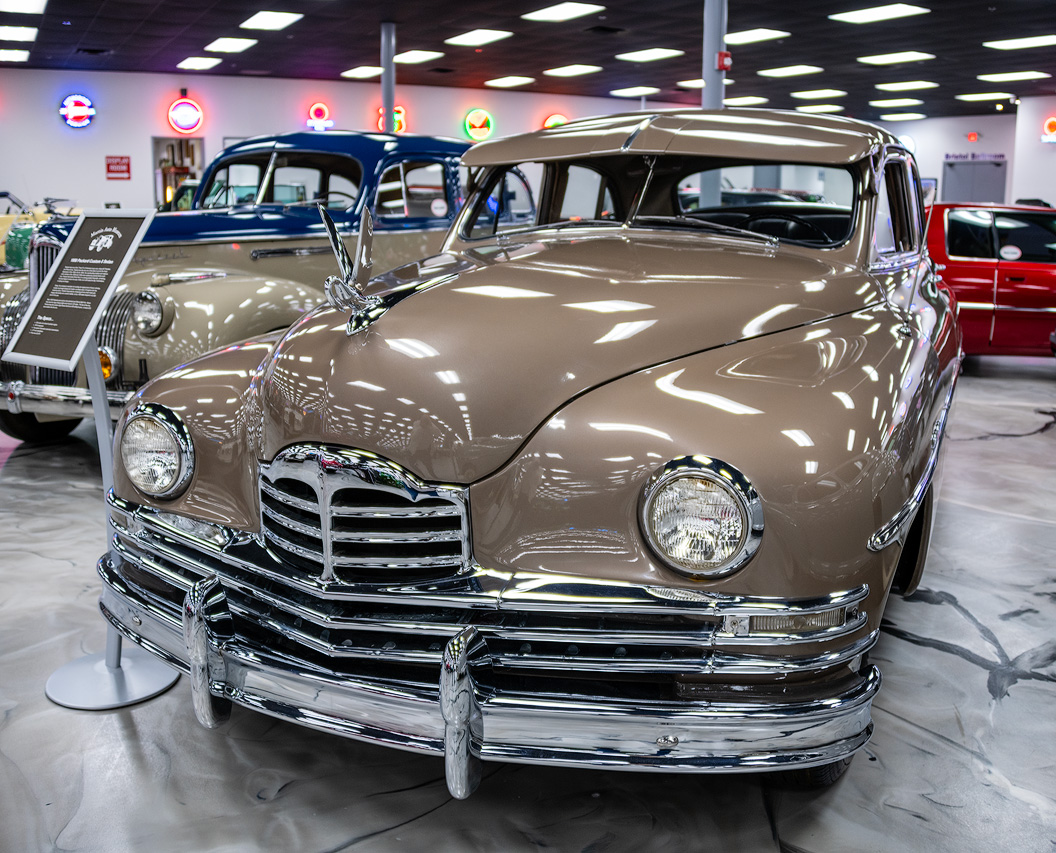
Slowly, the company's reputation for building the highest level of luxury vehicles eroded, as jet-aged styling and modern overhead-valve V-8 engines took the market by storm. Packard responded by introducing all-new sheet metal with designs that briefly even outsold Cadillac, but by 1950 sales dropped to 42,000 cars for the year.

Most 1950 Packards were built on the standard and Deluxe Eight line. Above them was the Super Deluxe Eight which found 4,722 sales. The top-of-the-line Packard was the Custom Eight Series which found 955 willing buyers, of which 870 were sedans like this one.
1949 Plymouth Special DeLuxe Convertible
The Plymouth DeLuxe and Special DeLuxe were full-sized automobiles that were produced during the 1941-42 and 1946-50 model years. They were produced at the Lynch Road Assembly facility in Highland Park, Michigan. This 1949 Plymouth Special DeLuxe convertible is one of 15,240 built that year, evidence of its popularity.
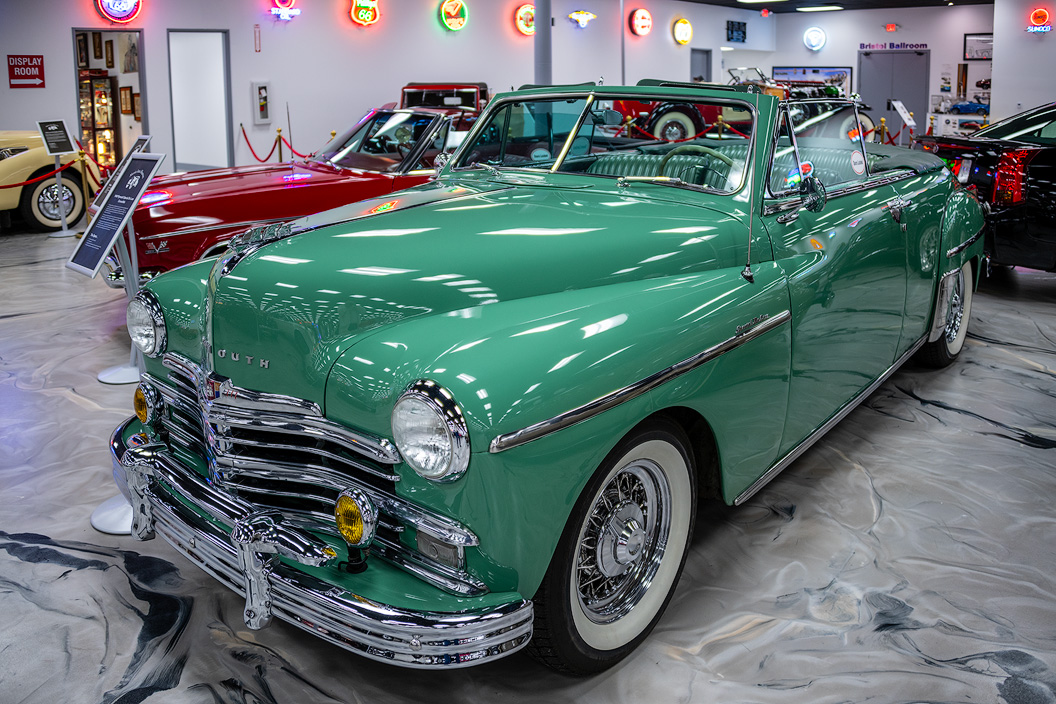
The hood ornament was nautical in nature — honoring Plymouth, the port in England from which the Pilgrims departed and the site of the landing of the Mayflower in Massachusetts.

The De Luxe was offered in two trim levels, the De Luxe and the top-of-the-line Special De Luxe. In 1949, the engine was upgraded to produce 97 horsepower from the 95 horsepower engines in previous model years.
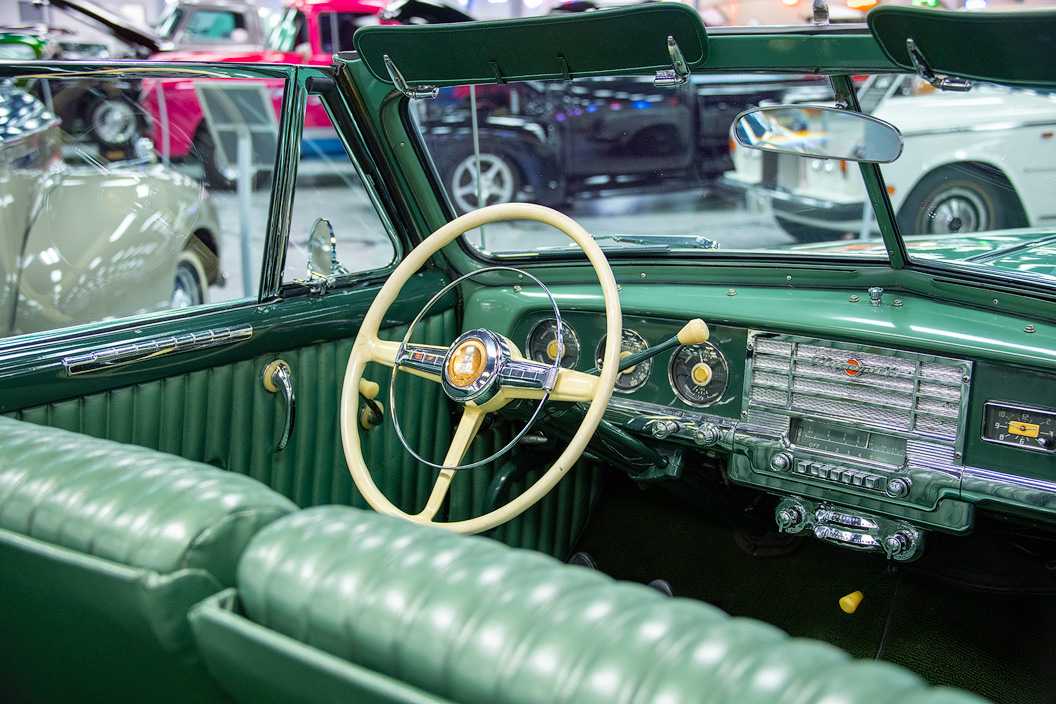
The engine was built for long life and fuel economy. The dealer brochure for the 1949 Plymouth noted: "...over half of all standard built cars registered as taxicabs are Plymouths! And this great new Plymouth is built in the same tradition; it's the best of a long line that's always been famous for economy."

1966 Chevy Impala SS Convertible
Redesigned in 1965, the Fourth Generation (1965-1970) Impala proved very popular. Impala set an all-time industry annual sales record with more than one million cars sold in the United States in 1965 alone. The total production for the Impala SS for 1966 was 119,314. This was disappointing considering the huge sales numbers the model posted the previous year.

As with previous years, 1965 Impalas featured more chrome trim inside and out, with pleated tufted upholstery and door panels.
As it had been since 1964, the Super Sport (SS) was its own Impala line, and a buyer had several engine choices. The model also distinguished itself from other Impalas with slim-profile Strato-bucket front seats which were new for the year, as well as other sporty trim both inside and outside the car.

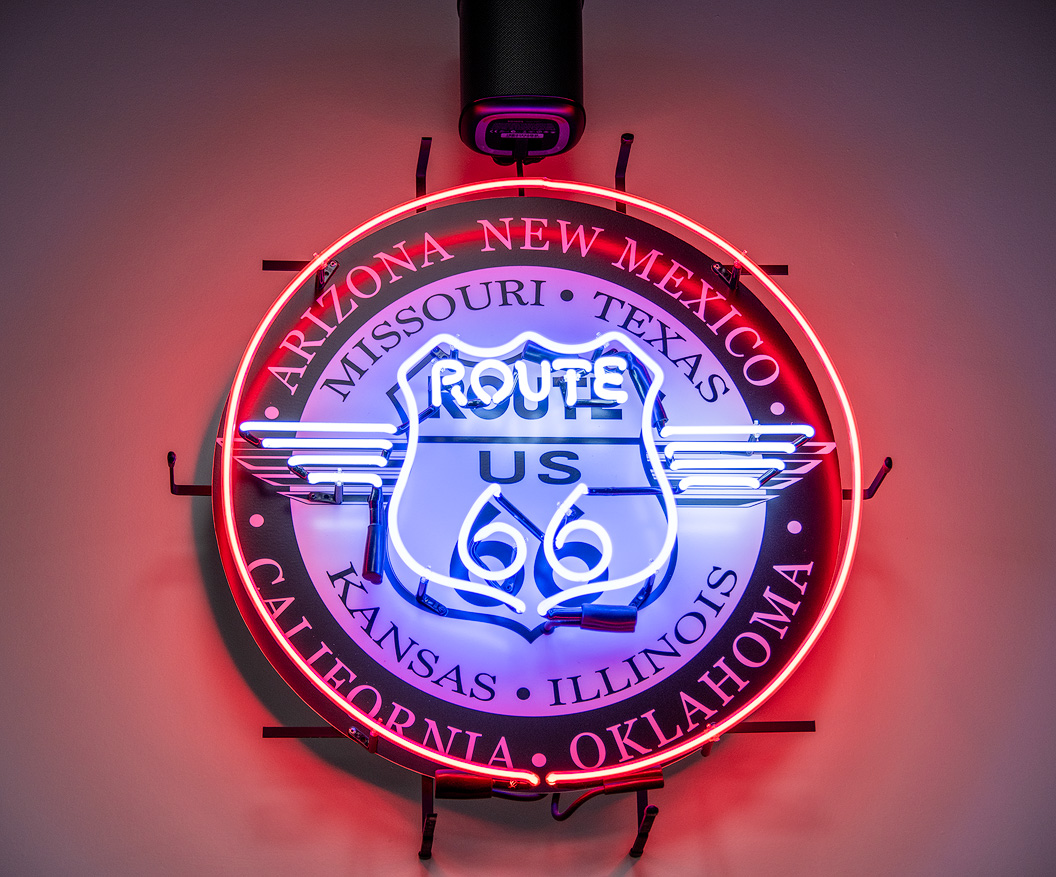
Route 66 was one of the original highways in the United States Numbered Highway System. It ran from Chicago, Illinois, through Missouri, Kansas, Oklahoma, Texas, New Mexico, and Arizona before terminating in Santa Monica, California, covering a total of 2,448 miles (3,940 km).
During my sophomore year at Purdue, a good friend in college and I were able to rideshare (in the old sense with a guy who had a car) from West Lafayette, IN to Los Angeles, CA during Christmas break. We shared the cost of gasoline and took turns driving. It seemed that I always had the shift driving into the sun or with the sun reflecting in the rearview mirror. While in California, we went to the Rose Bowl Parade and other sightseeing attractions. Good memories.