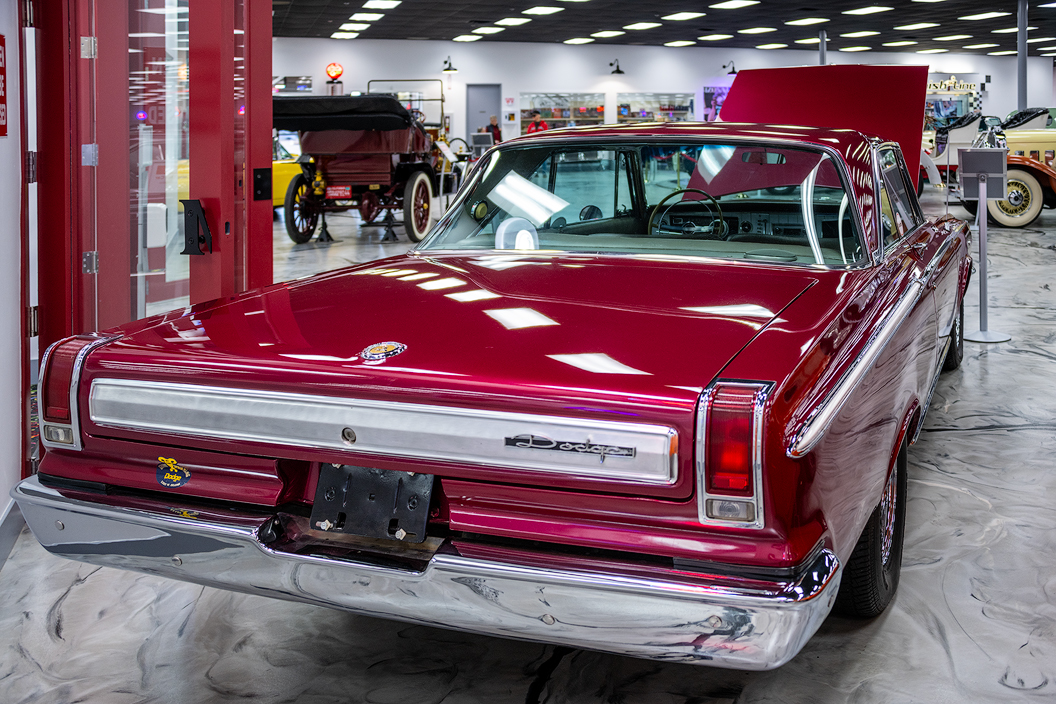
1965 Dodge Coronet 440
The Dodge Coronet is an automobile that was marketed by Dodge for seven generations. It shared nameplates with the same bodyshell with varying levels of equipment installed. Introduced as a full-size car in 1949, it was the division's highest trim line and moved to the lowest level starting in 1955 through 1959.
The Coronet reappeared for the 1965 model year as the intermediate-sized B-body using a 117-inch wheelbase — continuing what had been the Dodge Polara. For 1965, Dodge sold slightly over 209,000 units, making the Coronet the most popular model sold by Dodge that year. Trim levels initially were base Coronet, including a Deluxe version, Coronet 440, and Coronet 500.

The middle of the Coronet lineup was the 440, which was available as a two-door hardtop, convertible, or station wagon. The 440 designation did not indicate engine displacement as commonly assumed — the nomenclature was a carryover theme from the 1963-64 Polara series. About 87,500 Coronet 440 models were sold in 1965 and included as standard, a V-8 engine (273 cubic inches), exterior trim and badging, bucket seats, padded dash, and chrome floor console. The basic price for the 1965 Coronet 440 was $2,345. Dodge produced only 200 Coronet 440s with a 426 cubic-inch Hemi V-8 engine, making this a very rare car.
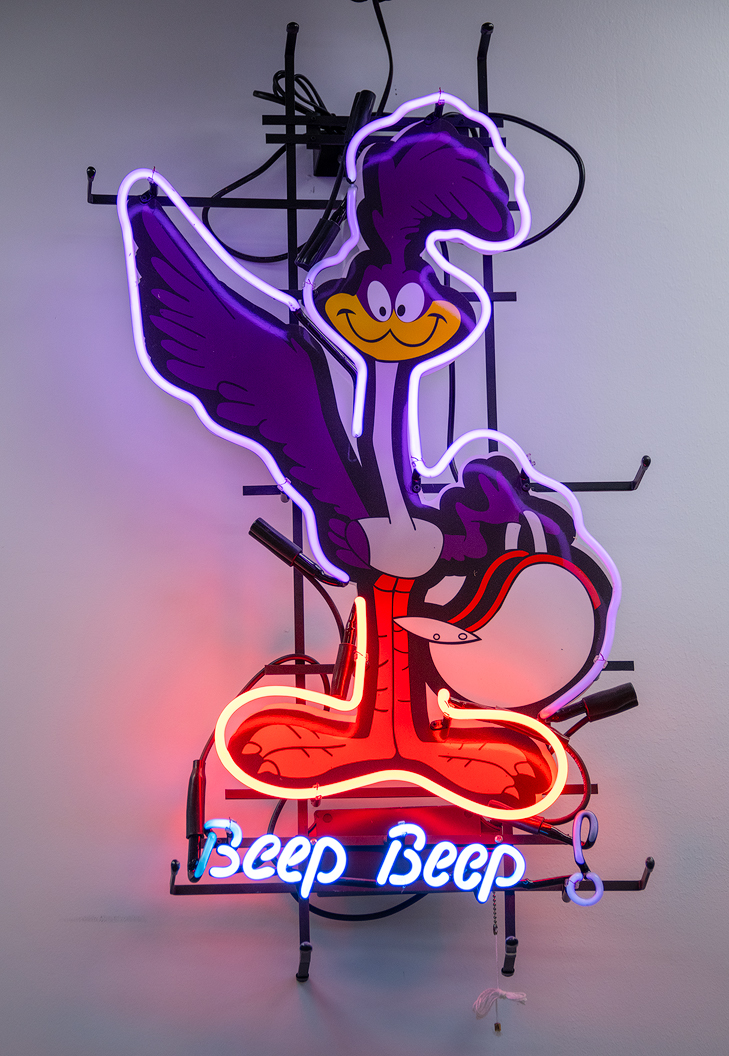
The cartoon Road Runner entered the auto world with a Plymouth model of the same name. And no, Wile E. Coyote could never catch one.
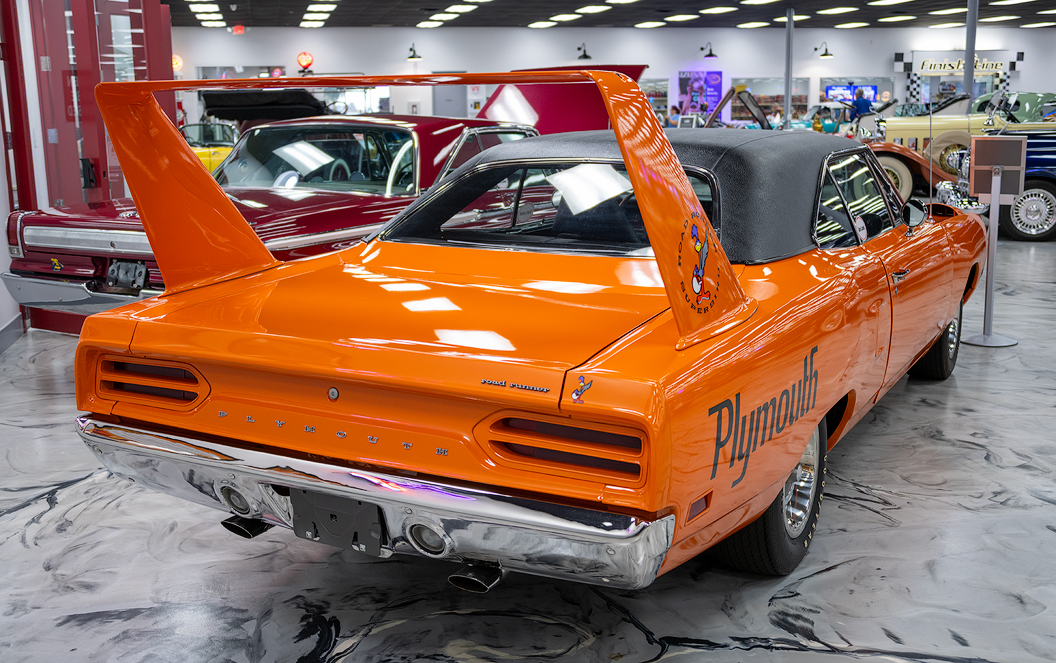
1970 Plymouth Superbird
The Plymouth Superbird is a highly modified, short-lived version of the Plymouth Road Runner with well-known graphics and a distinctive horn sound. Like the 1969 Dodge Charger Daytona, the Superbird was largely designed for stock car racing. Using information garnered from Daytona's 1969 racing season, the Superbird incorporated many engineering changes and modifications. Despite the success of the Superbird on the track, 1970 would be the only year it was made. Base factory pricing for the Road Runner in 1970 was $3,024, while the Superbird started at $4,298.
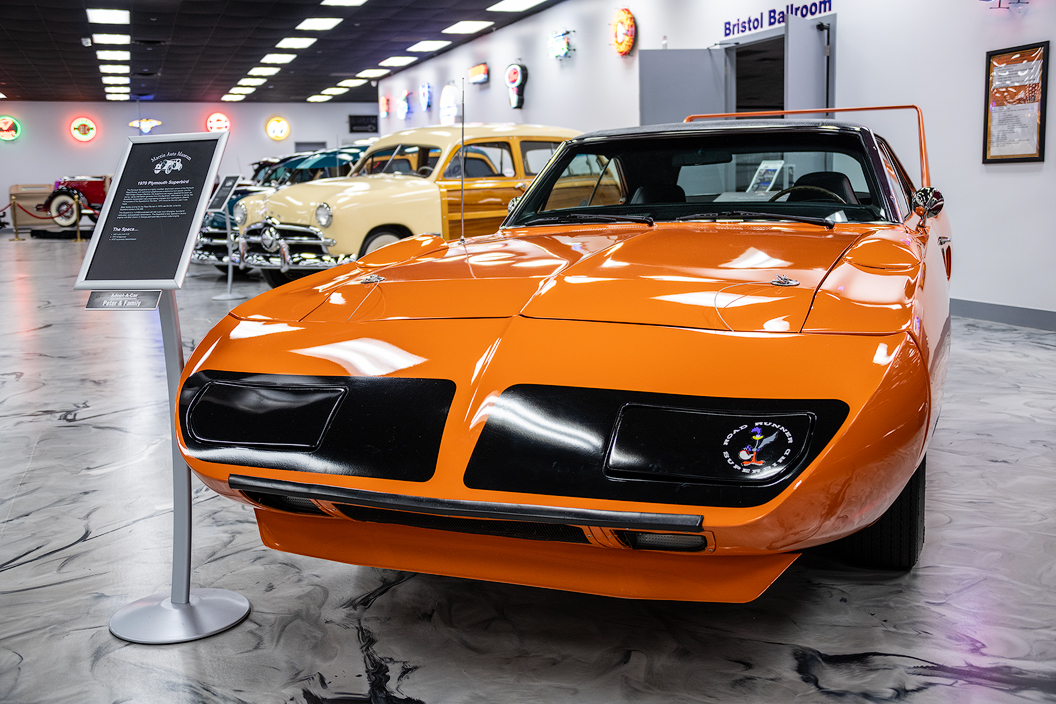
This Superbird is one of 626 produced with a 440 cubic inch V8 engine, four-barrel carburetor, and automatic transmission. This Superbird is fully restored to factory original with EK2 Vitamin C Orange paint and has a correctly coded engine.
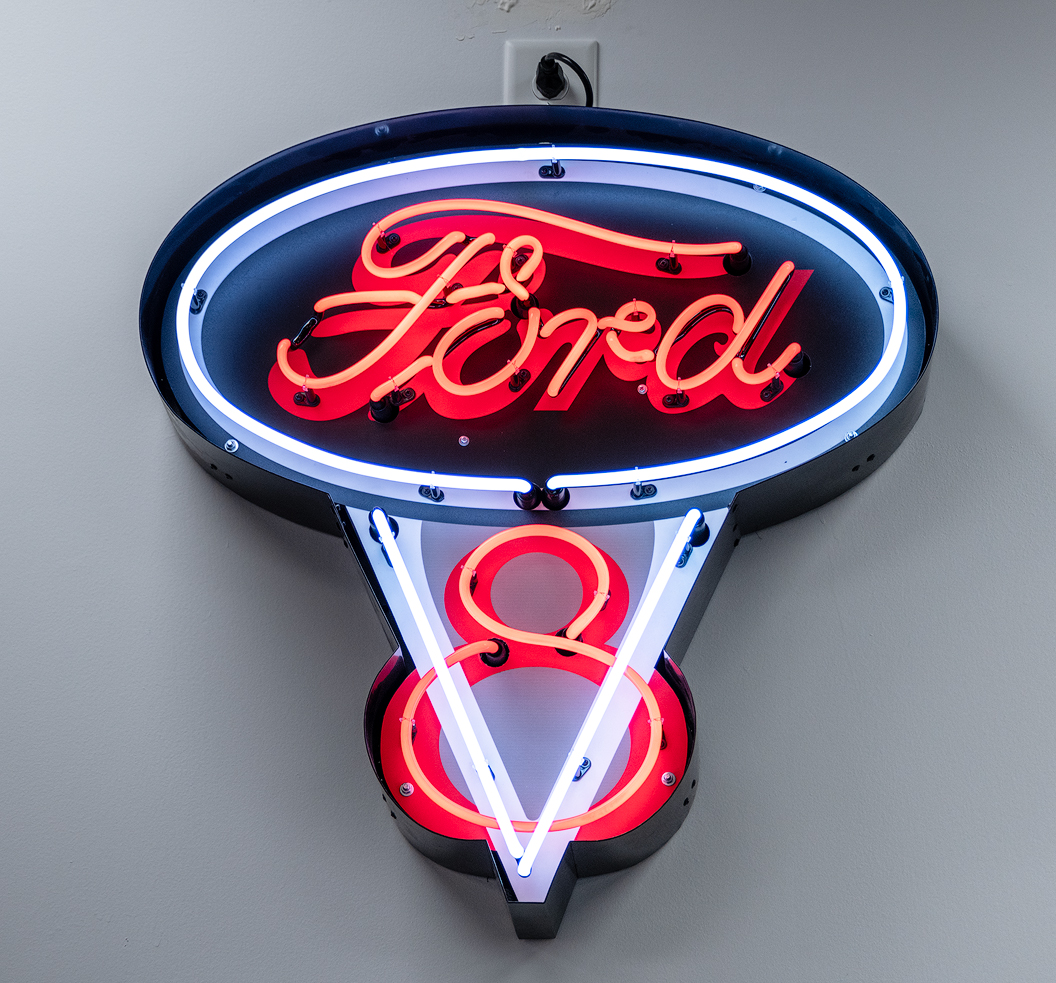
This Ford neon sign even incorporated an artistic V8 for the engines that took so many so fast.
1949 Ford Woody Wagon
This 1949 Ford Woody Wagon has everything that we love about classic cars in one vehicle. It has the iconic '49 Ford styling, with classic wood sides and the legendary bullet nose.The 1949 Ford models debuted at a gala at the Waldorf-Astoria Hotel in New York City in June 1948, with a carousel of the new Fords complemented by a revolving demonstration of the new chassis. The new integrated steel structure was advertised as a "lifeguard body" — and even the woody wagon was steel at heart. The convertible frame had an "X member" for structural rigidity.
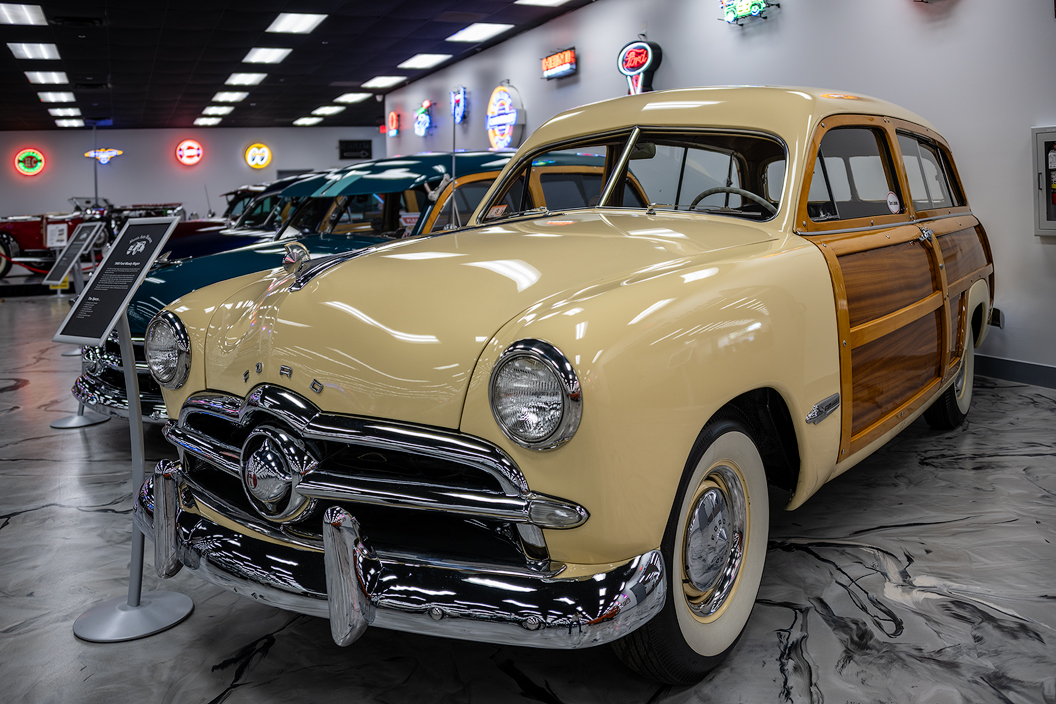
The all-new 1949 Ford was said at the time to be the car that saved the Ford Corporation. Ford sold more than one million of the 1949 model cars, which was best among American manufacturers.
My Uncle Whitey had a woody wagon but I seem to recall it was a Chevy, not a Ford — as if that makes any difference today. He lived on the Eastern Shore of Maryland where most of our extended family lived. Every summer, Mom, my sisters, and I would travel from Baltimore to the coast to visit and have a great time. The woody wagon was the transportation of choice when we went to the Ocean City boardwalk to play games, eat delicious seafood, ride the rides or to go swimming in the ocean. On the way home, we stopped at a favorite ice cream store that offered the best fresh peach ice cream you ever tasted. Ah, those were the days!
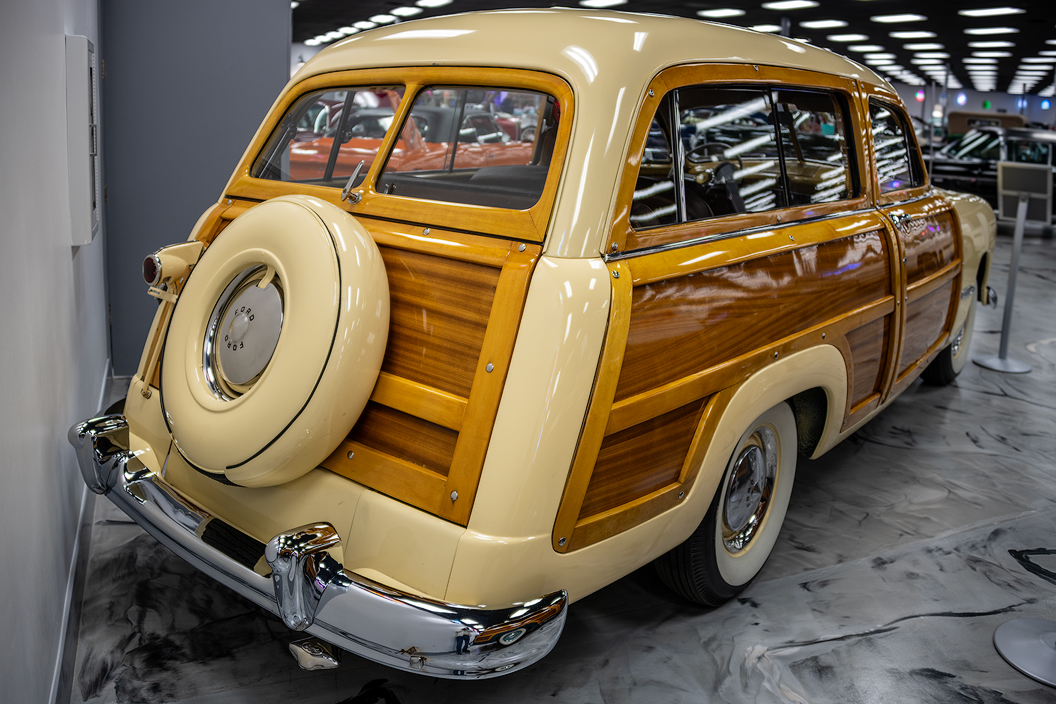
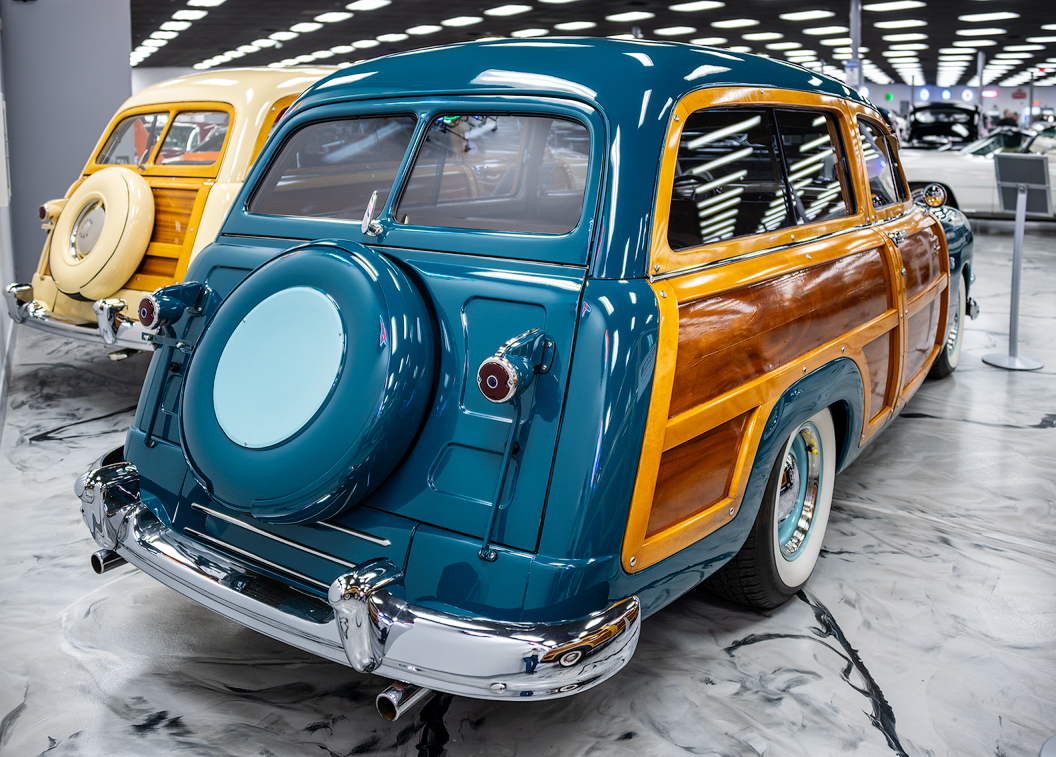
1951 Ford Country Squire Wagon
Considered the premium station wagon of the Ford division, the Country Squire was distinguished by its external woodgrain trim. From 1950 to 1991, eight generations of the Country Squire were produced. The first generation included the 1950 and 1951 models.
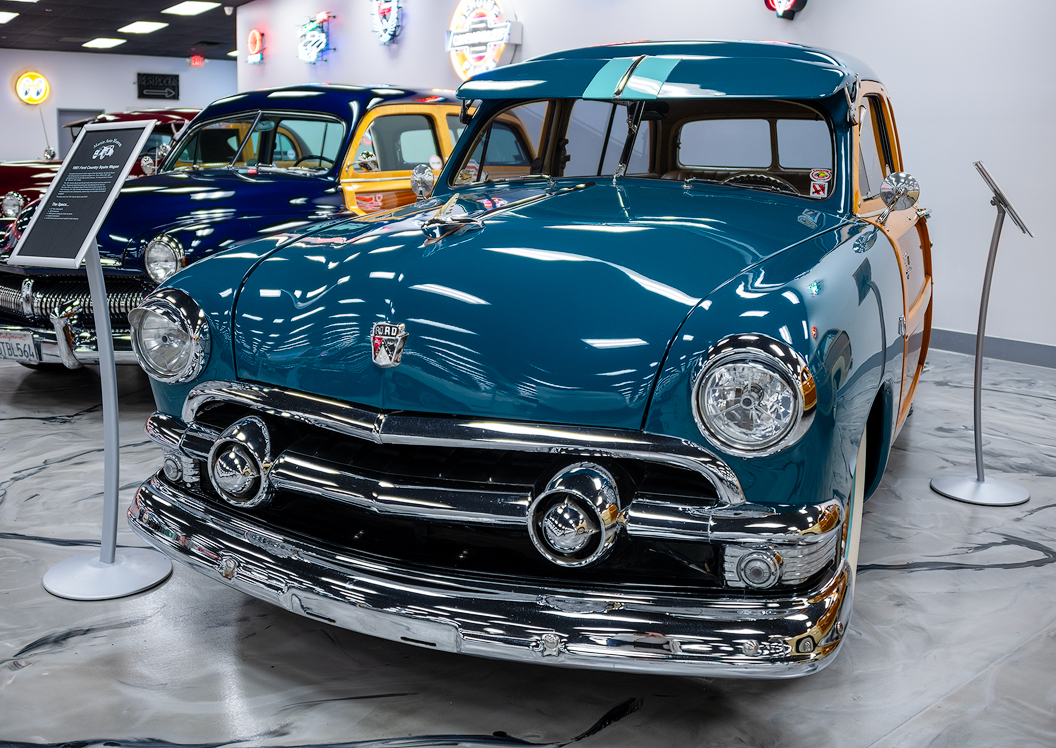
The 1951 Country Squire was the last model where actual wood was used on the body. The genuine wood body panels were manufactured at the Ford Iron Mountain Plant in the Michigan Upper Peninsula from lumber owned by Ford Motor Company. For the 1952 model year, all-steel bodies replaced wooden body structures to reduce production costs. Subsequently, the exterior body trim consisted of simulated woodgrain.
The base price of the 1951 Country Squire was $2,021.
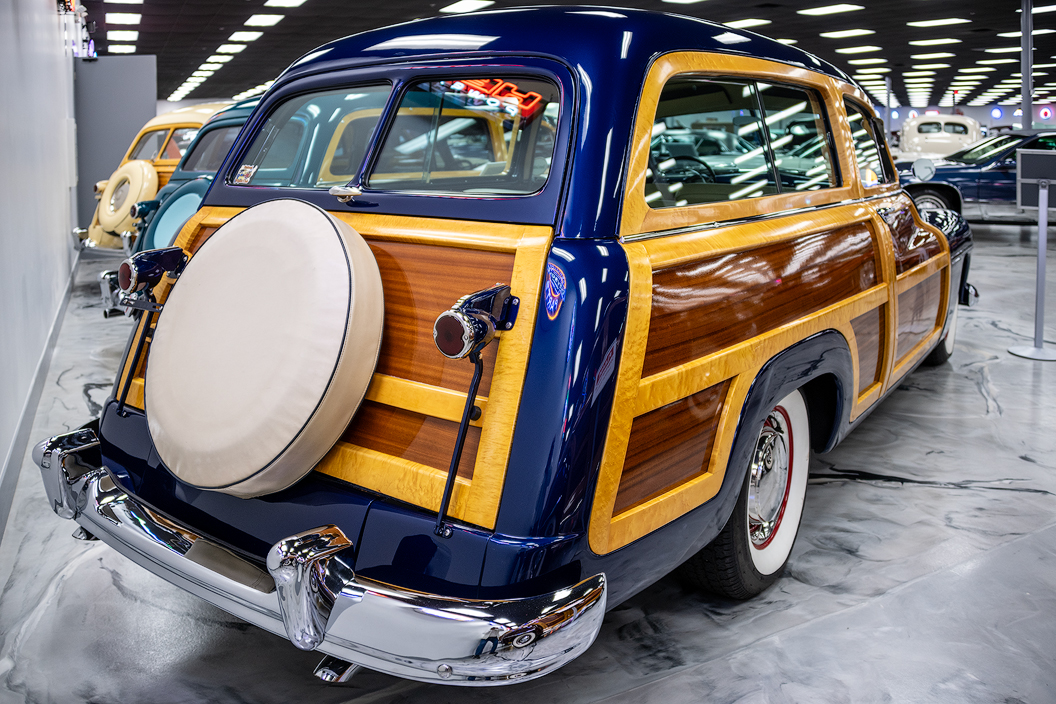
1951 Mercury Woody Wagon
The 1951 Mercury Woody Wagon was one of five variants of the Mercury Eight offered at the time — the coupe, convertible, sedan, and station wagon.Hollywood also has a fondness for the Mercury Eight, as it can be found in such movies as Rebel Without a Cause, American Graffiti, Thunderbolt and Lightfoot, and Grease.
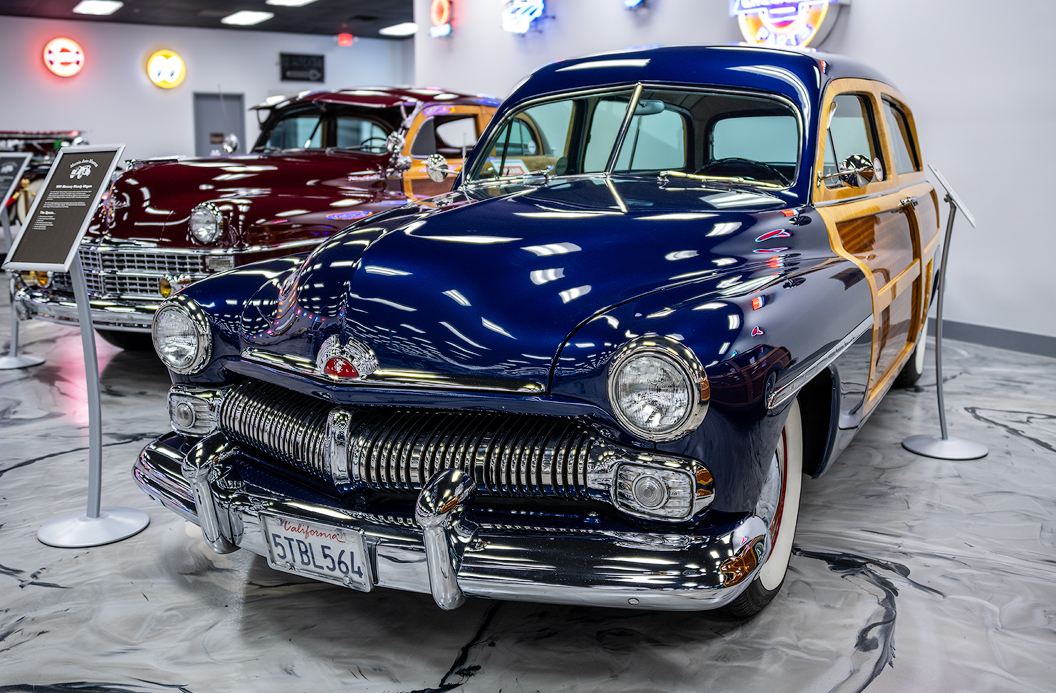
The 1951 models would prove the most popular with more than 300,000 cars sold, including only 3,812 station wagons. This would be the last Ford-produced station wagon that would qualify as a real Woody.