Wow!!! Another one of the geometric art objects — this one with mirror-like surfaces reflecting everything around them. In fact, it is hard to tell whether certain surfaces are reflections or real objects.

Here we see Chollas, a genus of cacti. They are native to northern Mexico and the Southwestern United States. They are known for their barbed spines that tenaciously attach to skin, fur, and clothing.

In the foreground is Cereus hildmannianus, a species of cactus from southern South America. Its distribution is uncertain but probably includes Brazil, Paraguay, Uruguay, and Argentina. The white flowers are very large, up to 25–30 cm (10–12 in) long, and are followed by fruits which are red when ripe.

This appears to be a stand of organ pipe cactus. It is native to Mexico and the southwestern United States. It tends to be found in rocky desert areas. The Organ Pipe Cactus National Monument is named for the species and is located on the border between Arizona and Mexico.

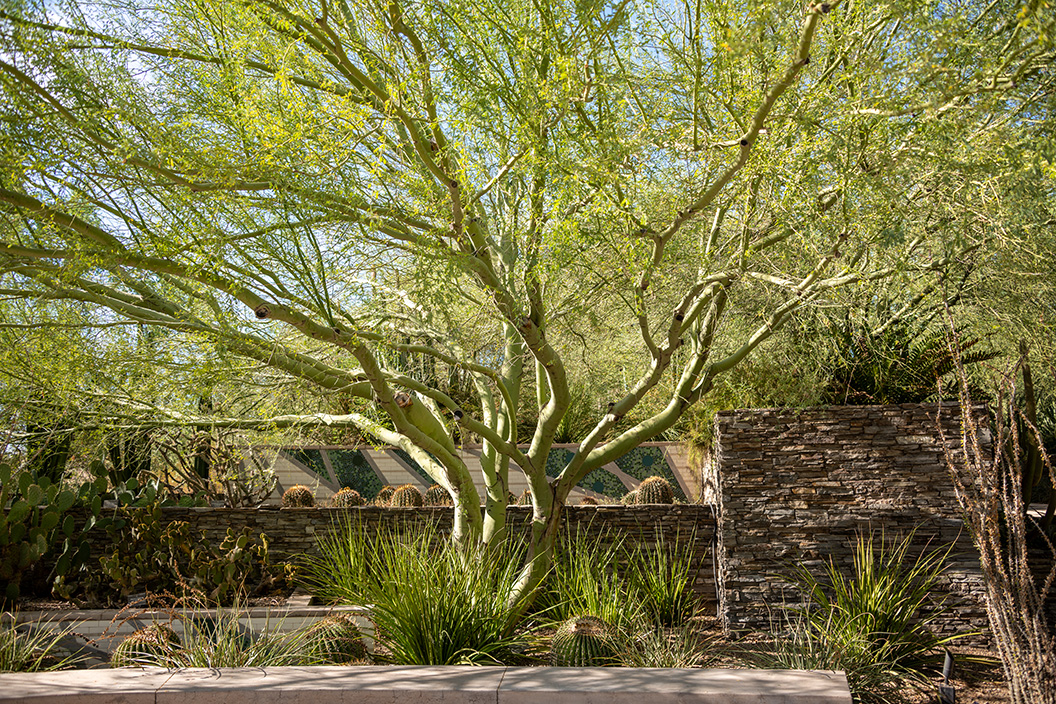
Parkinsonia aculeata is a species of perennial flowering tree in the pea family, Fabaceae. Common names include palo verde, Mexican palo verde, Parkinsonia, Jerusalem thorn, jelly bean tree, palo de rayo, and retama. They are easily recognized by their green bark. We sell a fair number of them (when they are still smaller) in Lowe's Garden.
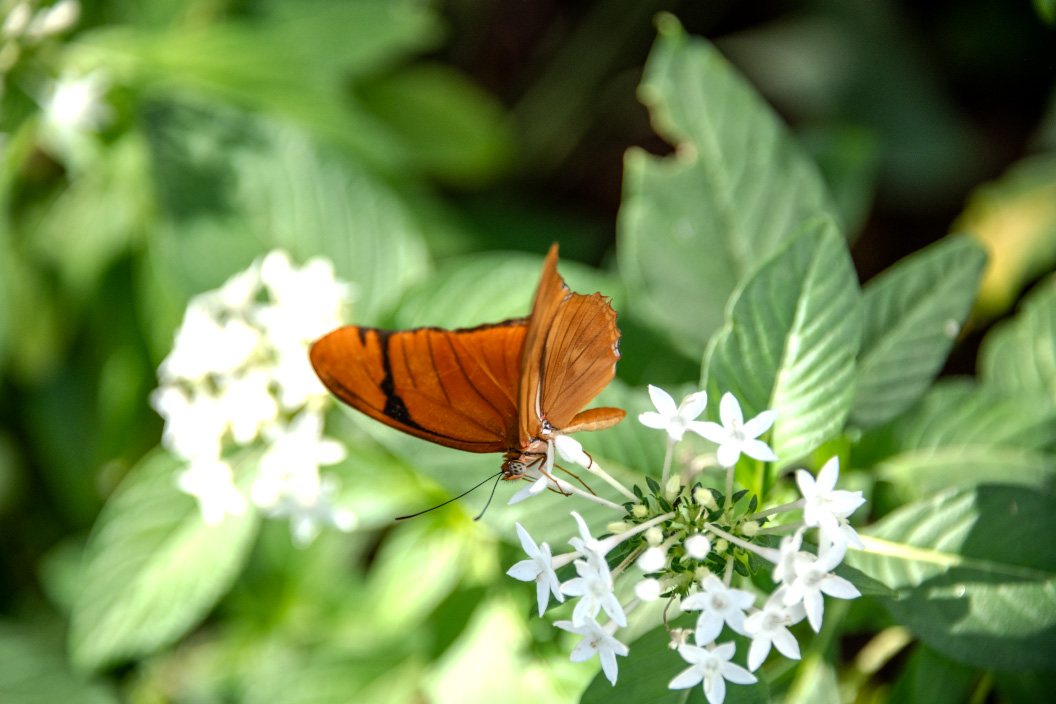
This appears to be the Hudson pear (Cylindropuntia rosea), which is a cactus native to the Sonoran Desert in Arizona and northwestern Mexico. This is an intentionally introduced species to Australia, where it has become an invasive species and noxious weed. The plant is spread by stem pieces and possibly by fruits that have attached to rubber tires and shoes. Animals are particularly at risk from injury caused by the spines.

Here we see Prickly Pear cactus, a genus of flowering plants in the cactus family Cactaceae, many known for their flavorful fruit and showy flowers. These cacti are well-adapted to aridity; however, they are still vulnerable to alterations in precipitation and temperature driven by climate change. Prickly pear alone is more commonly used to refer exclusively to the fruit, but may also be used for the plant itself.
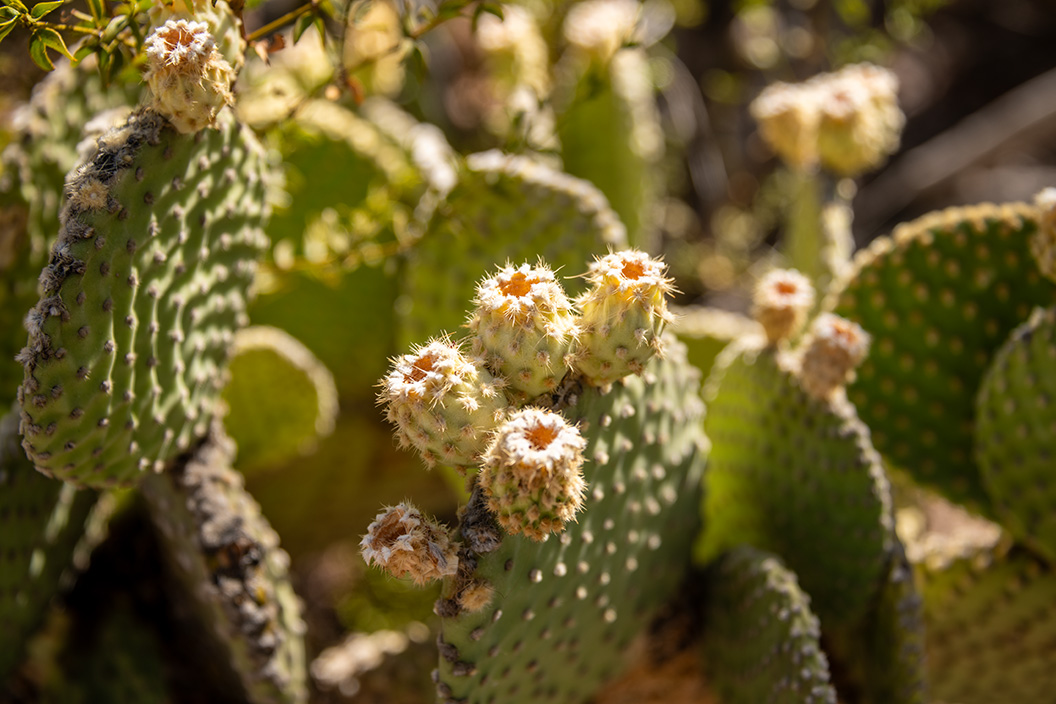
On my way to the Butterfly Pavilion, I encountered another of the giant 3-D geometric figures. Every time I saw one, my mind said, "These artists are so talented and filled with great imaginations.” I'll be back after dark.
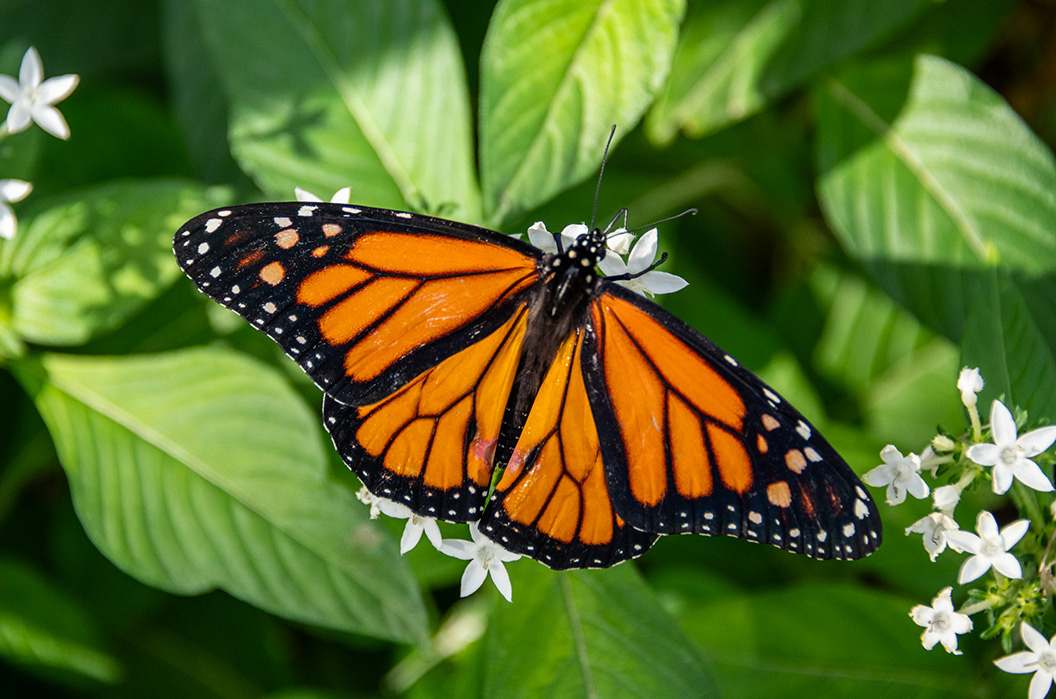
Well, I finally made it to the Butterfly Pavilion and was immediately greeted by dozens of butterflies. This one is a Monarch Butterfly. It is among the most familiar of North American butterflies and an iconic pollinator. The eastern North American monarch population is notable for its annual southward late-summer/autumn instinctive migration from the northern and central United States and southern Canada to Florida and Mexico. During the fall migration, monarchs cover thousands of miles, with a corresponding multigenerational return north in spring. The western North American population of monarchs west of the Rocky Mountains often migrates to sites in southern California, but individuals have been found in overwintering Mexican sites as well. Non-migratory populations are found further south in the Americas, and in parts of Europe, Oceania, and Southeast Asia.

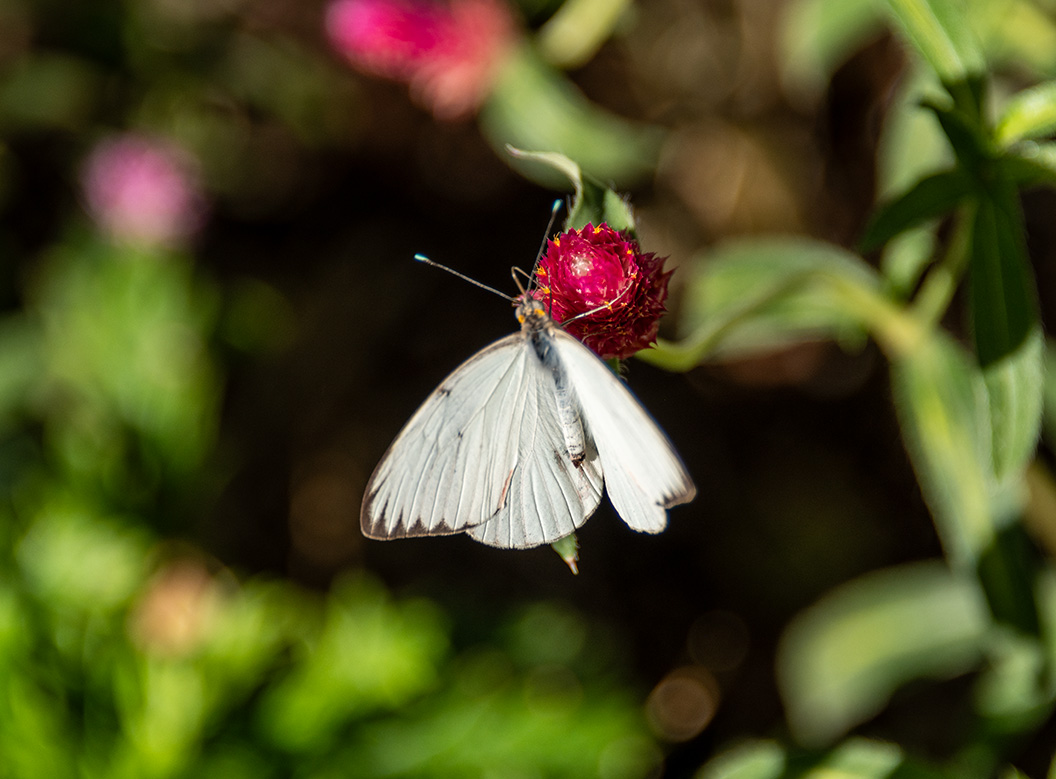
Ascia is a genus of butterflies in the family Pieridae. It is monotypic, being represented by the single species Ascia monuste, commonly known as the great southern white. In this species, the sexes may differ, with the female being either light or dark colored. It is found from the Atlantic and Gulf coasts of the United States and south to Argentina. It is migratory along the south-eastern coast of the United States, with strays to Maryland, Kansas, and Colorado.
Here is another Monarch Butterfly, which for some reason, reminded me that there is a substantial colony of Monarchs on Maui. In fact, there is a Monarch Butterfly farm there, just four miles south of Lahaina (where the big fire destroyed many of the buildings in the town).
From their website, "Get a hands-on introduction to the Maui Butterfly Farm during this small-group guided tour. Learn how butterflies are bred in the butterfly production facility and discover butterfly species that are native to Hawaii. Get a chance to feed home-bred butterflies in the butterfly lighthouse. Tours are capped at 10 people for a personalized experience."
Note that the tour costs $50. Wow, that is expensive. Well, everything on Maui is expensive.
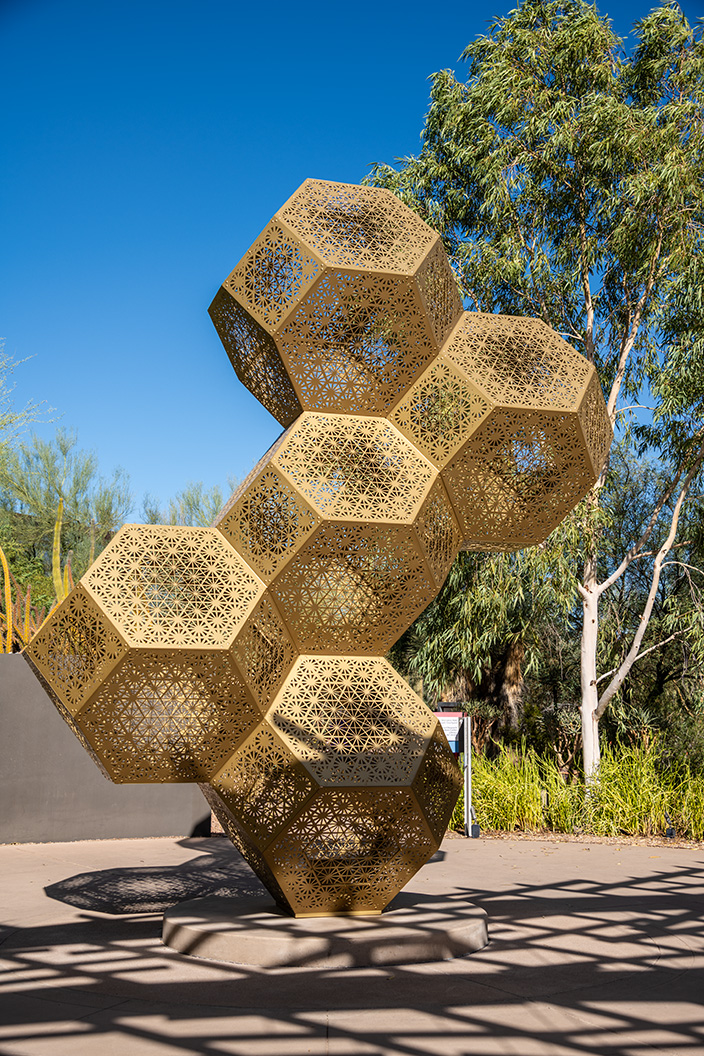
I believe this is a Dryas iulia (often incorrectly spelled Julia) butterfly, commonly called the Julia butterfly, Julia heliconian, the flame, or flambeau. It is a species of brush-footed (or nymphalid) butterfly. The sole representative of its genus, Dryas, it is native from Brazil to southern Texas and Florida, and in summer can sometimes be found as far north as eastern Nebraska. Over 15 subspecies have been described.