Wow, another Desert Willow, but a shrub this time, not a tree. I found a beautiful description of this wonderful shrub/tree online.
From thespruce.com, "The desert willow (Chilopsis linearis) creates interest in the way of color, form, and size. A unique shrub that is low maintenance and tolerant of extreme heat and drought, this plant thrives in a well-draining site in many types of soil. It does this all while attracting butterflies, bees, and birds. The only drawback is that it is not a fan of the cold, so the straight species has a very narrow habitable range. If you are looking for a gorgeous Arizona shrub with great color and size, give the desert willow a look."

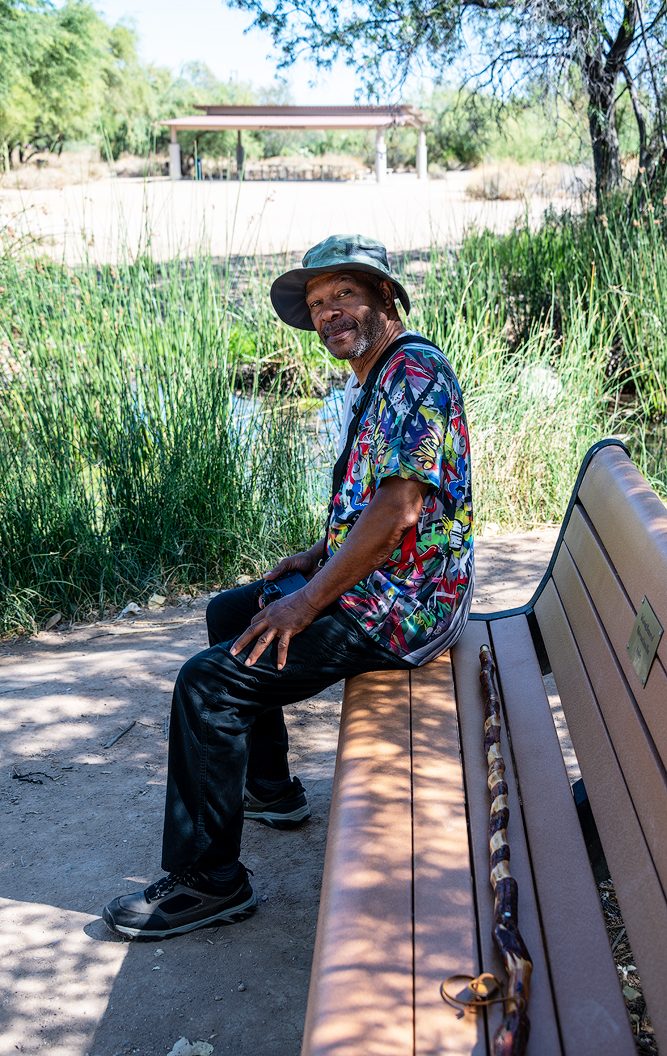
There were not many people in the park that day but I did run into a fellow photographer. He was sitting and waiting to photograph dragonflies (like those I shared last week). We chatted for a while as one does when encountering someone with common interests. Eventually, I decided to continue my photographic journey, continuing along the lakeside trail while he waited for his dragonflies to show up.
On the other side of the trail was a refreshing stream feeding fresh water into the lake (although they had labeled it as a waterfall on the map). Rocks and plants were strategically placed to provide that bubbling brook soundtrack to an otherwise quiet place.

I traced the stream back up the hill, capturing a few lovely photos as I went along. How much was natural and how much was artistically arranged by humans? Who knows, but it was beautiful and peaceful.

This spot was especially appealing with a wider channel in the stream so the water flowed more slowly and lots of natural vegetation on both sides.

Now my curiosity got the best of me as I wanted to find the ultimate source of the stream. The water flow slowed with the flatter terrain and different types of vegetation took over. Notice the shorter plants to the far side of the stream...

...captured here photographically with a closer view. The PictureThis application identified it as "herb of grace" — a perennial, non-aromatic herb that serves various uses. For example, this plant, with succulent, rounded-shaped, thick evergreen leaves and white flowers with four to five petals, is used in traditional Ayurvedic medicine. The leaves of this herb can be eaten as well.

Eventually, the source of the stream could no longer be traced and I found myself surrounded by desert (not an unusual occurrence in Arizona). This cactus is the well-known prickly pear. As I mentioned in a previous issue, this plant played an important role in the lives of the indigenous people of the southwest desert. I am glad it is preserved as a common part of the landscaping used everywhere here.
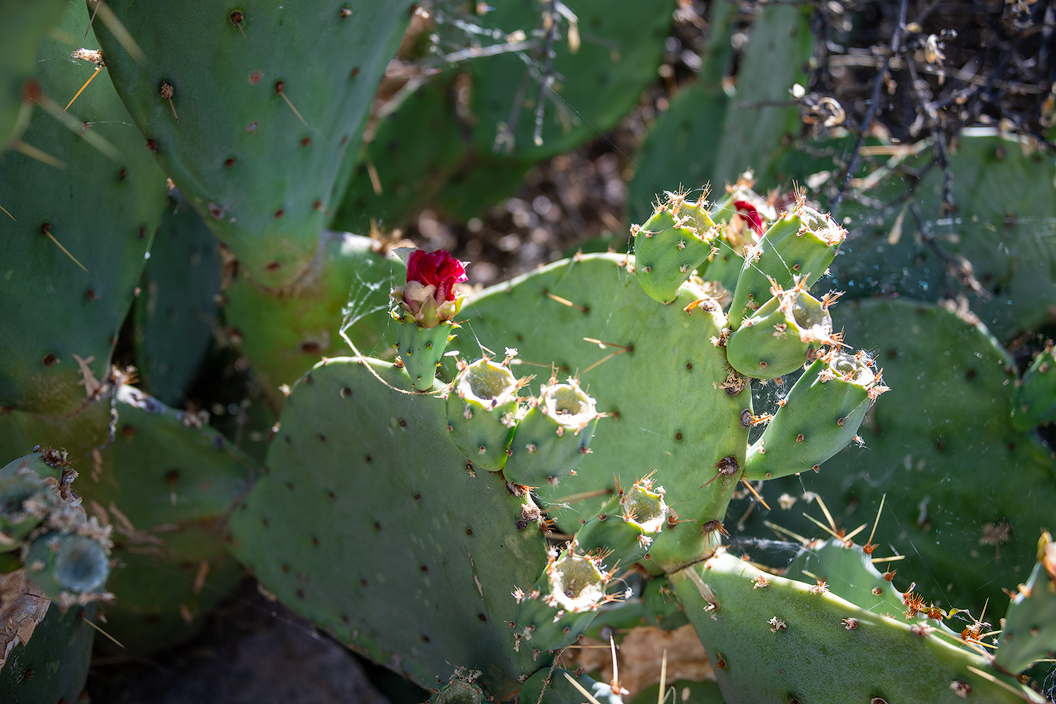
Nearby is another example of a cholla cactus, specifically, jumping cholla. According to PictureThis, "with its unusual growth form and branches densely covered with spines, jumping cholla looks like a tree-cactus. At the end of each stem hangs a fleshy fruit, which becomes spineless over time and can remain attached to the stem for several years." This one did not have the fruit — the wrong season, I guess.

Back down at the lake sure, I encountered a grandmother with her young grandson, feeding the ducks. He became bored with the activity and dumped all his remaining duck food on the ground so that the ducks had a veritable feast.

I looked out on the lake and spotted a duck that looked a bit like a Mallard but I could not be sure — I am not an expert and could not find the right resources online. However, I quickly concluded that he was passing on the duck food on the shore in favor of a female companion, coming in his direction.

How sweet. Together again.
