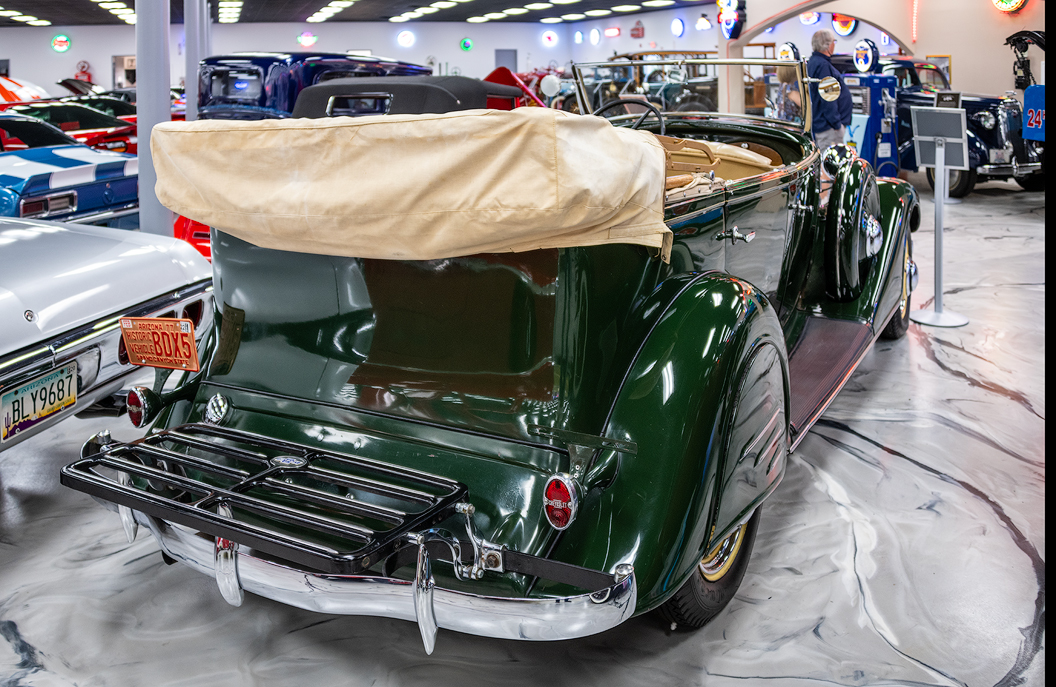
1934 Chevy Series DC Standard Four-Door Phaeton
Chevrolet offered buyers a choice of two extensive model line-ups in 1934. The Standard Series was built on a five-inch shorter wheelbase than the Master models. Surprisingly, only in the Series DC Standard models was a Phaeton available. The Standard Series was only mildly restyled in 1934 with a longer hood, more streamlined horizontal louvers fitted, and a fancier hood ornament. Standard models were also distinguishable by painted black headlamp buckets, fewer vertical bars in the grille, and less metal trim. A top speed of 80 miles per hour was possible in a Standard Chevrolet.

Chevrolet once again beat Ford in the sales race. Chevrolet produced 556,666 vehicles in 1934, with 99,499 being Standard models. Yet, for rarity in a Chevrolet, you need look no further than this Chevrolet Phaeton. Only 234 Phaetons were built in 1934.

This car has been used by the museum in many parades, including several times for the Grand Marshall of the annual APS Electric Light Parade in downtown Phoenix.
The Specs...
- 181 cubic-inch straight 6-cylinder engine
- 60 horsepower
- 3-speed manual transmission
- Carter 1V Model W1 carburetor
- 107-inch wheelbase
- Original price of $425
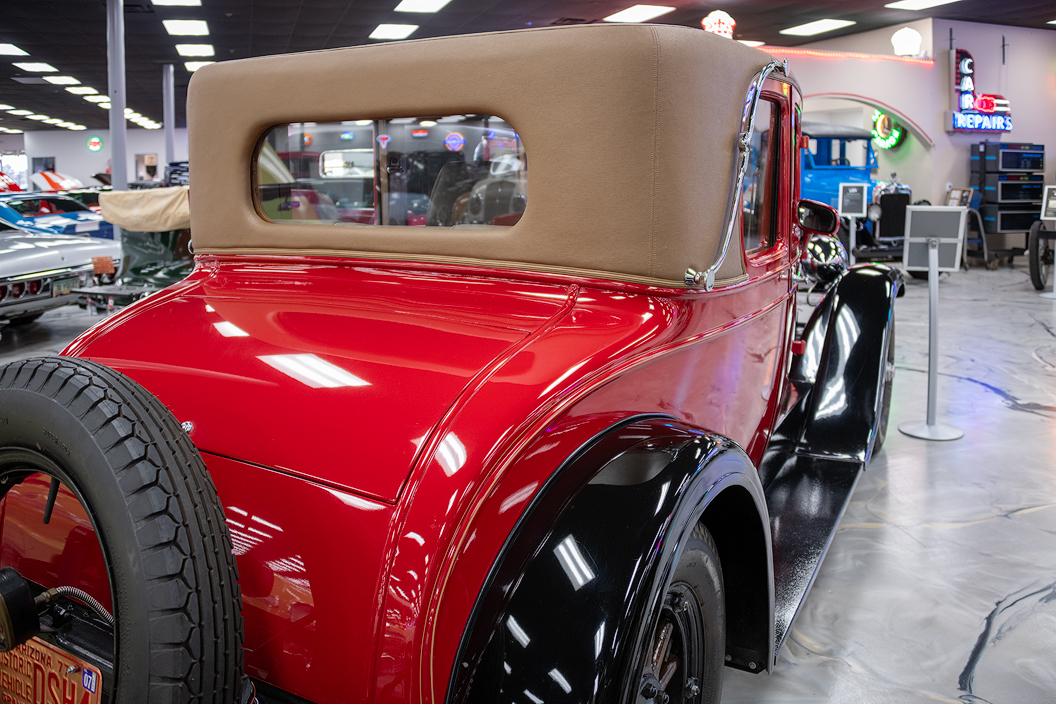
1928 Plymouth Model Q DeLuxe Coupe
In 1928, Walter P. Chrysler acquired the Dodge Brothers company and launched two entirely new companion –lines, the DeSoto and Plymouth. Originally called the 'Chrysler Plymouth' to identify it with Walter Chrysler, the Plymouth Model 'Q' replaced the four-cylinder Chrysler as the company's entry-level price leader. They were fitted with a three-speed manual gearbox and hydraulic drum brakes in both the front and rear.

The Plymouth marque provided Chrysler with a vessel that could compete head-to-head with Ford and Chevrolet, marking the creation of the industry's low-priced three.' The Plymouth's Mayflower sailing ship logo linked the car with the Pilgrims' landing at Plymouth Rock. A thin, ribbon-style radiator shell made the hood look even longer.

Model year production for 1928 reached 66,097 units. The Model Q was available in seven different body styles that included two roadsters (one with a rumble seat), a DeLuxe Coupe, a tourer, a 2- and 4-door sedan, and a standard coupe. The DeLuxe Coupe was offered in two colors — Russet Brown and Norman Gray.
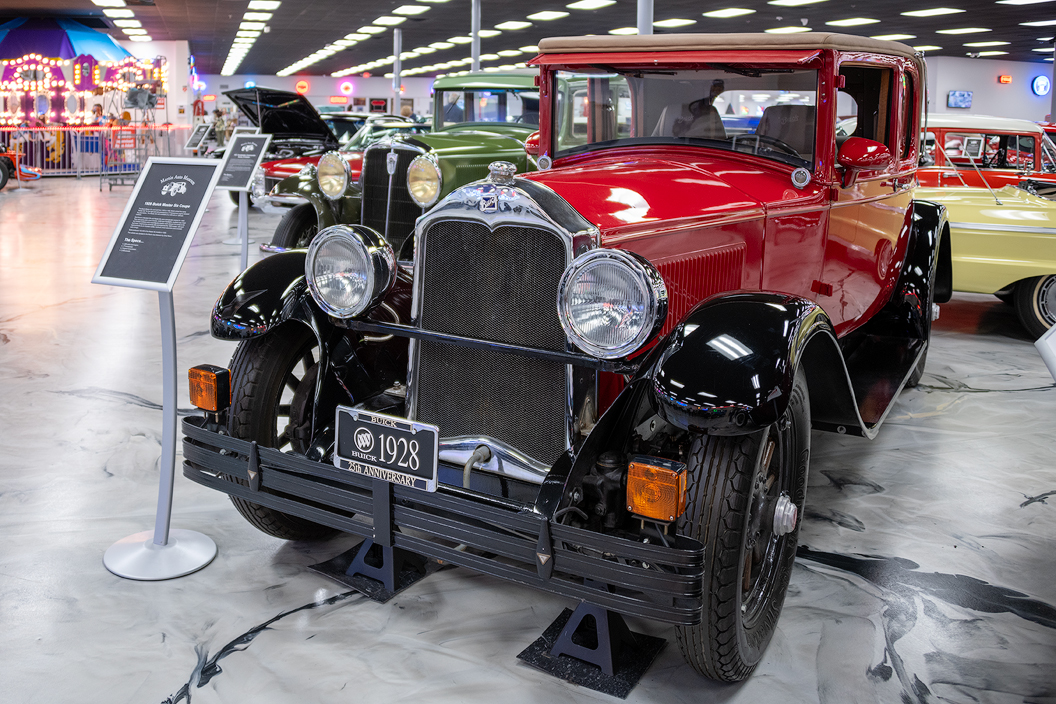
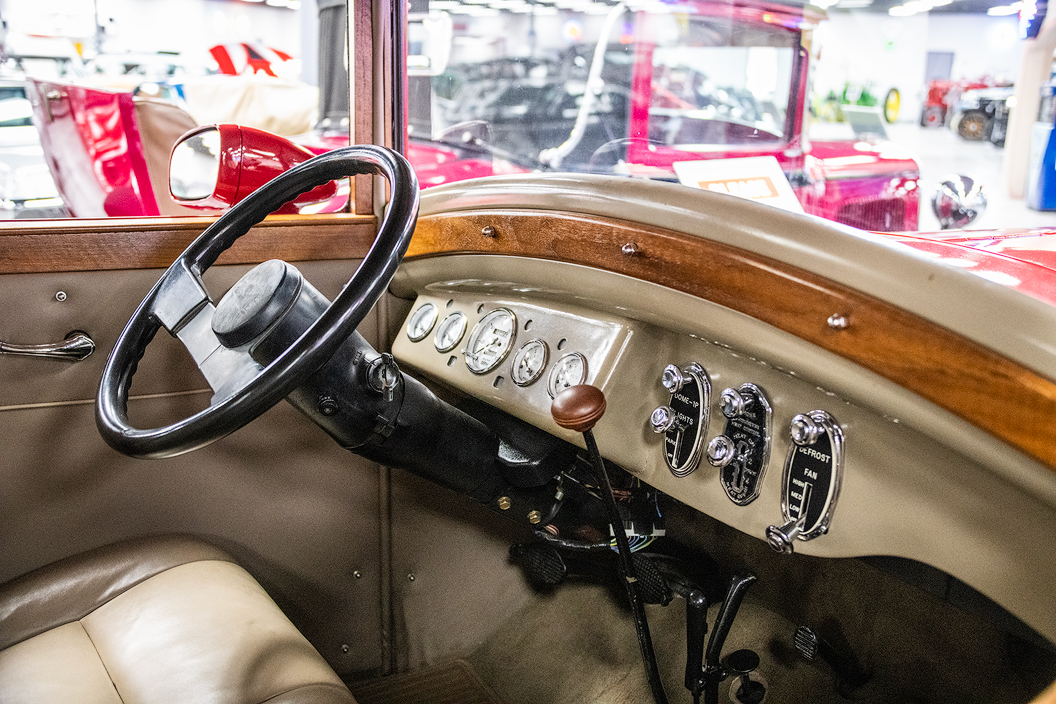
This restored car is mostly original and was the Best-of-Show at the 1998 San Clemente Car Show, in addition to a number of other awards.
The Specs...
- 170.3 cubic-inch L-head four-cylinder engine
- 3-speed manual transmission
- 45 horsepower
- 109.8-inch wheelbase
- Original price of $720
1931 Studebaker Commander Series 70 Sedan
The Studebaker Commander is the model name of a long succession of
automobiles produced by the Studebaker Corporation of South Bend, Indiana. Studebaker first used the Commander name in 1927 and continued to use it for most years through 1964. The model name was used for various vehicles in the company's product line-up and would often change from year to year.
For 1931, the all-new Commander Series 70 line began in July 1930 and continued until September 1931. Production in 1931 was 10,823 and the original price was $1,685.

The car features a new V-shaped radiator flanked by oval-shaped headlights along with parking lights that sit atop the front fenders. The single bar bumper has a V-shaped dip in the center. Freewheeling allows shifting without a clutch.
This Studebaker is on loan in the Martin Auto Museum from Sid Rosen with the Phoenix area Studebaker Club.

TheSpecs...
- 312 cubic-inch 8-cylinder engine
- 101–horsepower
- 3-speed transmission
- 4-wheel brakes
- 124-inch wheelbase

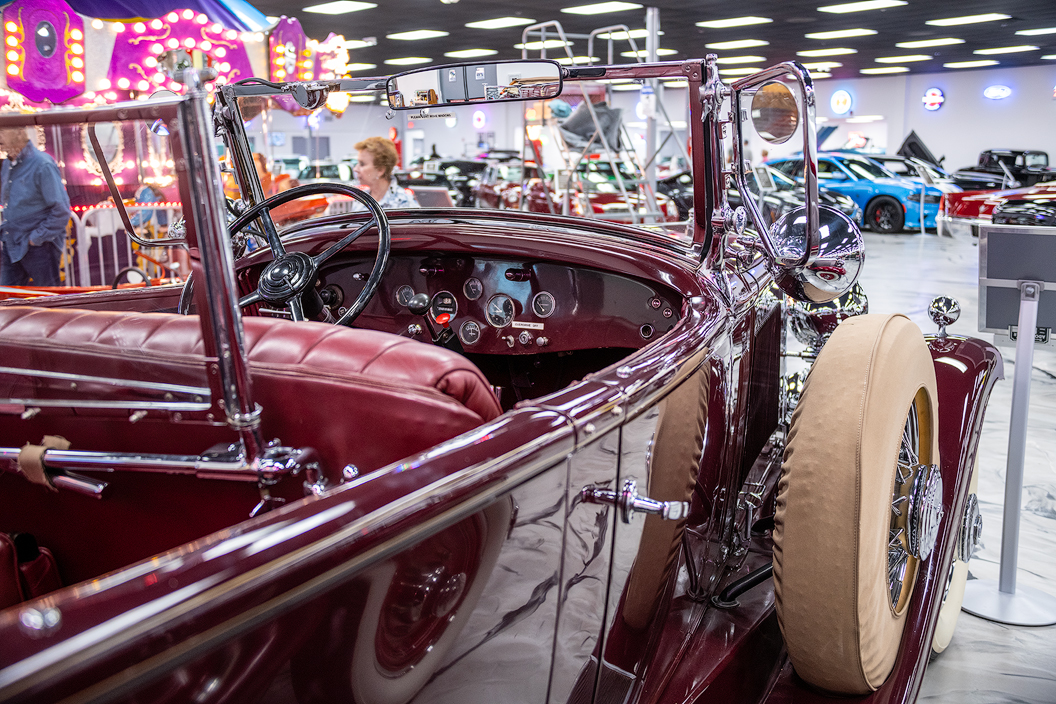
1930 LaSalle 340 Touring Car
General Motors chairman Alfred P . Sloan had been considering a new vehicle range to fill the ever-growing gap between Buick and Cadillac since about 1920, but it wasn't until 1924 when Cadillac's president Lawrence Fisher finally put that plan into motion. A key move from Fisher was to hire a talented young designer named Harley Earl to style this new car, called LaSalle. The son of a California coachbuilder, Earl was assigned the task of designing a stylish new motor car that would convey the elegance and status of Cadillac, but with a more sporting and agile design, and at a more affordable price point.

In 1930, LaSalle's V-8 was in essence the same size and output as the Cadillac's, imparting the lighter LaSalle with a sporty, agile feel. It seemed that GM came along with the idea for a junior Cadillac brand at just the right time. Given the economic crash of the late 1920s, the more affordable car sold exceptionally well in its first three years, often outselling its senior sibling handily. By the end of the 1930s, LaSalle had become a serious threat to Cadillac and was stealing sales from the flagship marque, so it was given the axe in 1940.

This 7-passenger car is a favorite of our founder and Chairman Mel Martin. He drove this car in the Great American Race (now the Great Race) twice — from Marietta, Georgia to Anaheim, California — then from Jacksonville, Florida to Sonoma, California. The LaSalle was the inspiration for the museum's logo and this car is occasionally used for special events like weddings, parades, car shows, and more.
The Specs...
- Coachwork by Fleetwood
- 134" wheelbase
- 340 cubic-inch, 90-degree, L-head V-8 engine
- 90 horsepower
- 3-speed synchro-mesh transmission
- Safety-mechanical brakes on all four wheels